The Definitive Danish Itinerary: Six Days of Scandinavian Design, Viking History, and Coastal Serenity
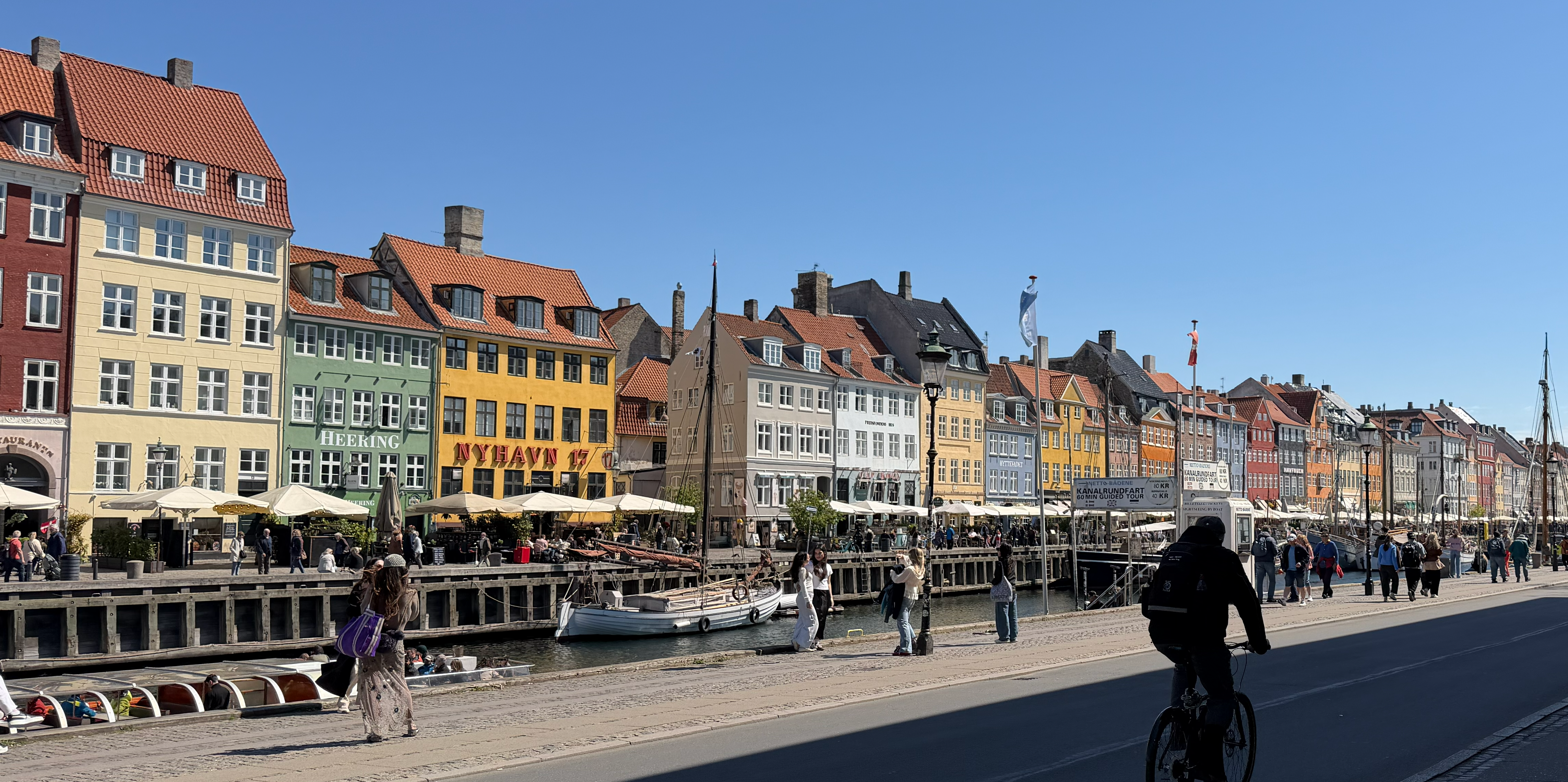 Our spring journey through Denmark unfolded as a perfect balance of active exploration and coastal relaxation. Visiting in May granted us long daylight hours and crisp, bright weather ideal for uncovering both urban marvels and maritime history. From the design-forward streets of Copenhagen to the historic shores of Roskilde, this territory blends ancient Viking heritage with unparalleled modern infrastructure.
Our home base for this six-day adventure was the newly opened Rox Resort in Køge, a peaceful Baltic Sea resort town just south of the capital. Armed with a comprehensive transit pass, we seamlessly navigated among islands and even crossed international borders.
Navigating the Danish Transit Network
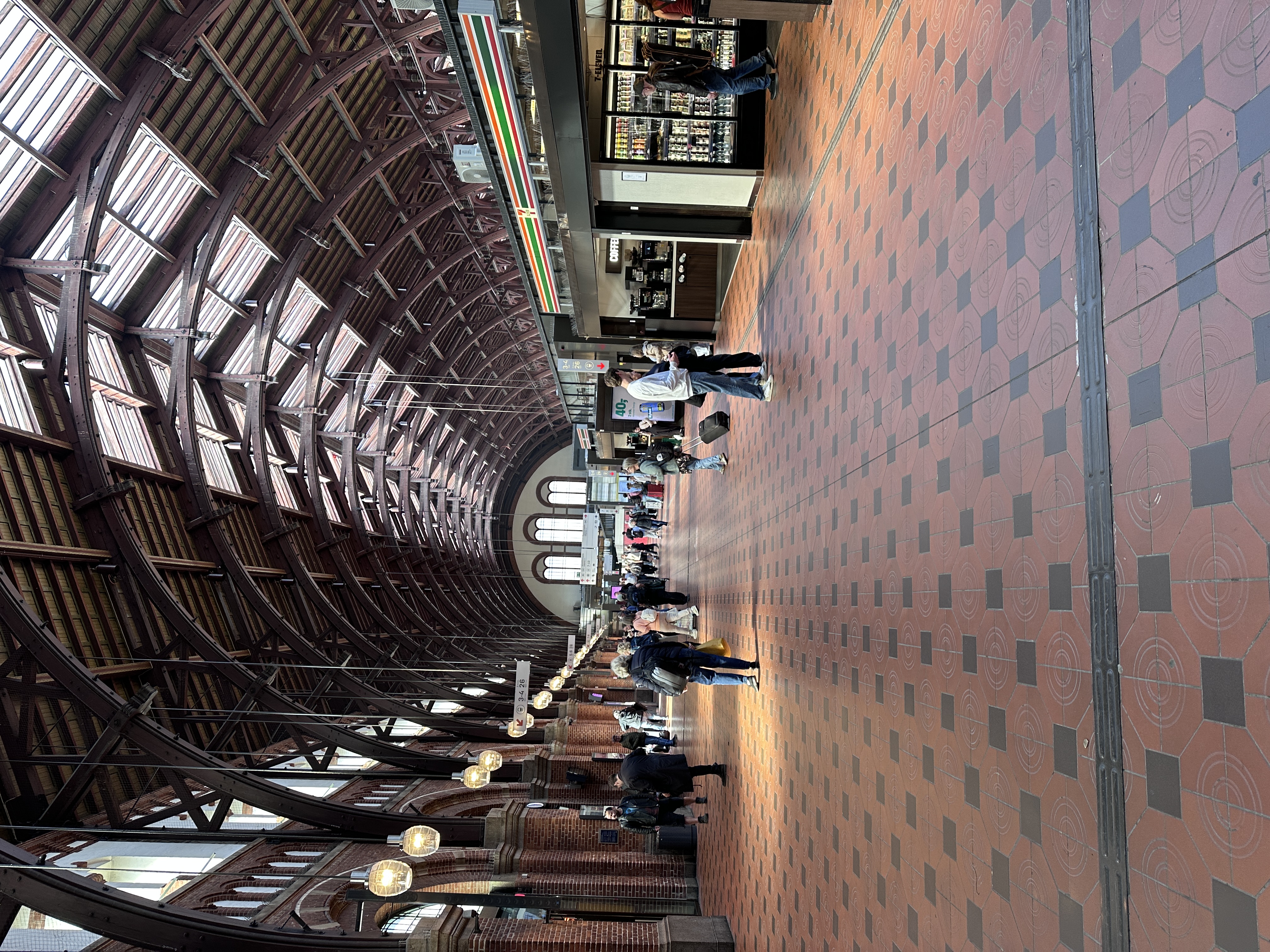 The public transportation matrix across Denmark stands as a global benchmark for efficiency, cleanliness, and punctuality. The entire system operates on a synchronized schedule, ensuring that transfers between trains, municipal buses, and the automated metro are seamless.
Essential Digital Tool: The official Rejseplanen app provides real-time transit updates, schedules, platform shifts, and instant digital ticketing across all regions of Denmark.
Our primary asset was the five-day Copenhagen Card Discover. This digital pass unlocks unlimited travel on the Metro, trains, and municipal buses across the entire capital region, while granting free entry to over eighty major attractions. It eliminates the friction of purchasing individual point-to-point tickets and delivers immense financial value.
User Comment (Tripadvisor Community): "Do not hesitate to purchase the Copenhagen Card. It saved us a fortune on train rides out to Roskilde and covered our entries completely. It makes navigating the city stress-free." - Mark V., United Kingdom
While regional trains run efficiently to distant islands, local transfers sometimes require alternative arrangements. Ride-sharing via the Uber application operates under strict national regulations. Drivers must comply with the same licensing, tax reporting, and metering mandates as traditional taxis.
Because of these guardrails, hailing an Uber provides an experience that is just as professional and legal as standard taxi service. For our departure, we arranged an international ride-sharing service straight from our resort to Copenhagen Airport, bypassing the logistics of handling heavy luggage at central hubs.
Strategic Hubs and Station Logistics
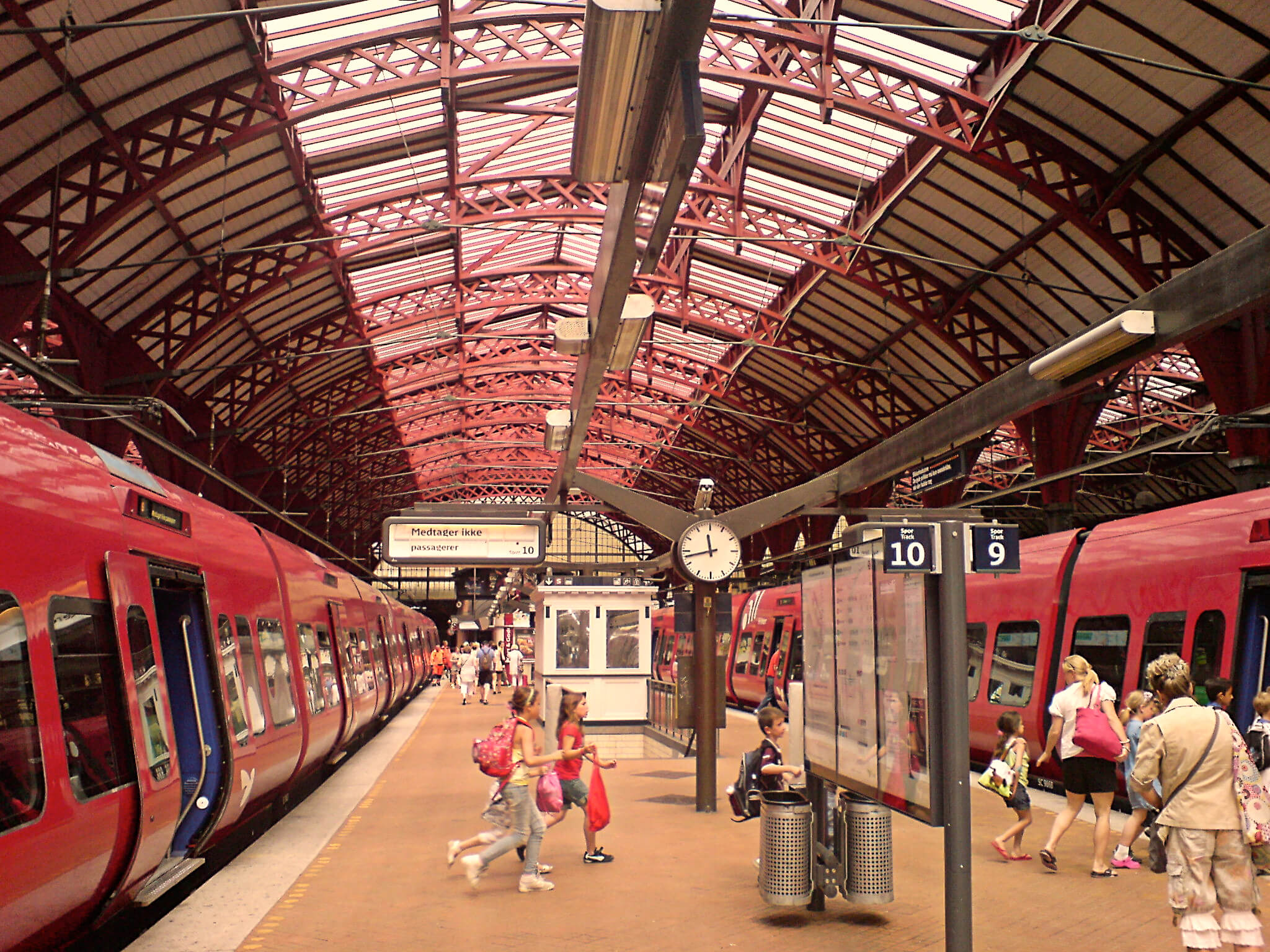 Our inner-city exploration naturally commenced at Copenhagen Central Station, locally designated København H. Featuring 15 active tracks, this massive red-brick terminal serves as the heart of the national rail network.
Navigating this terminal requires careful attention. Large electronic departures boards hang over the main concourse, while localized digital displays clearly list track assignments, intermediate stops, and boarding sectors at each individual platform. For real-time updates, downloading the official Rejseplanen app is highly recommended to track delays or platform changes.
Traveler Tip: Accessing public restrooms at Copenhagen Central Station requires digital payment. Automated turnstiles at the entrance accept major credit cards and contactless mobile payments for a small fee of roughly five to ten Danish Kroner. Keep your payment confirmation ready, as the facilities are strictly monitored for cleanliness and security.
Copenhagen Capital Exploration
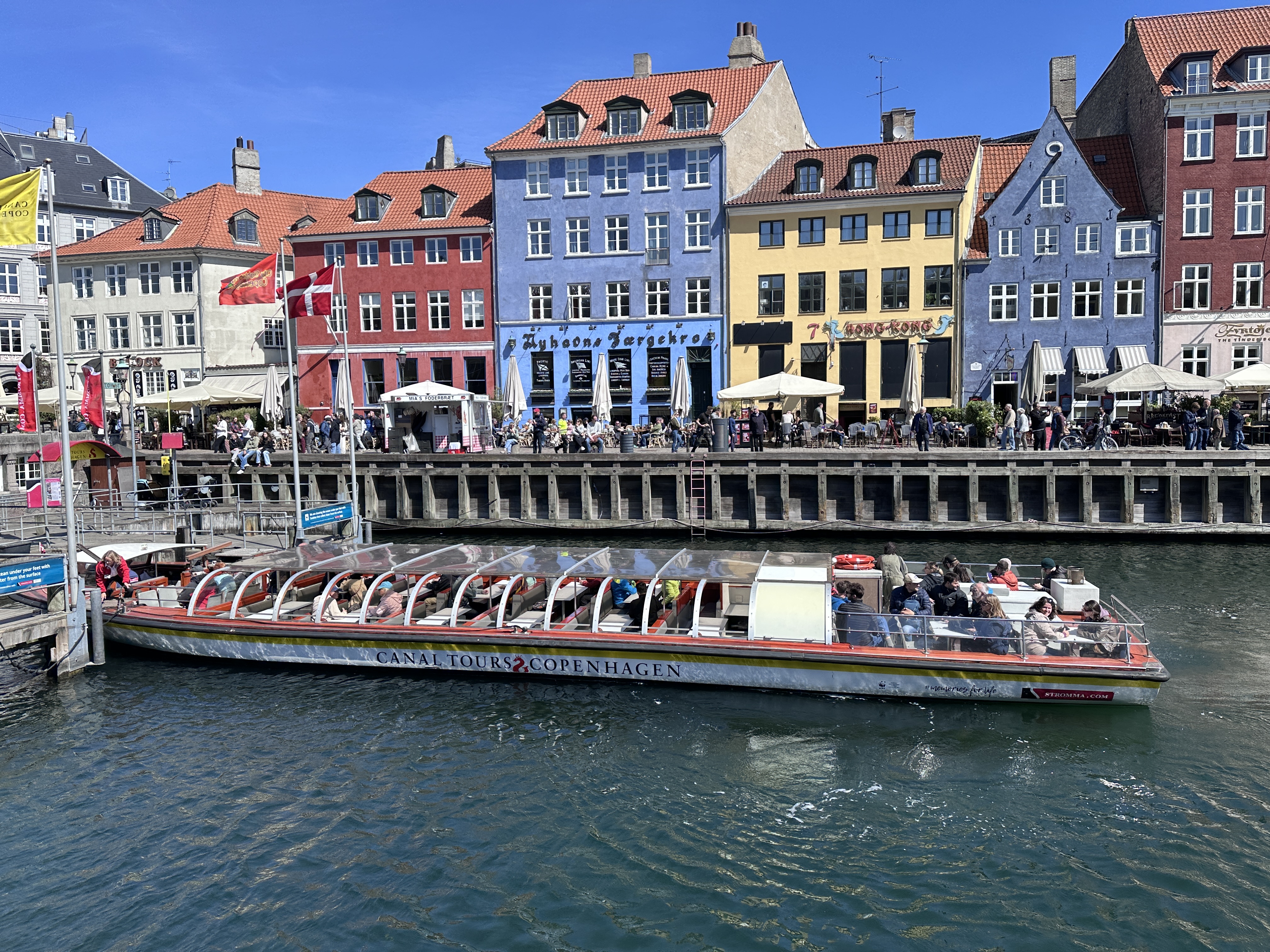 Stepping outside the central station brings you immediately into a dense landscape of historic architecture and pedestrian thoroughfares.
Nyhavn Waterfront
We embarked on a scenic walk from the station through Strøget, one of Europe's longest pedestrian shopping streets. The route weaves past major architectural landmarks, beginning with the historic City Hall and its grand dragon-topped fountain.
Moving deeper into the city, we passed the multi-story LEGO flagship store, the historic Stork Fountain at Amagertorv, and the grand cobblestone expanse of Højbro Plads. We briefly paused to view the contemporary installations at Nikolaj Art Gallery, housed in a former saint's church, before entering the sweeping circular plaza of Kongens Nytorv.
Danish urban planning strictly prioritizes functional zoning. While exploring, you will pass frequent familiar international chains. Burger King has a highly visible footprint throughout the central core, whereas McDonald's and Starbucks locations are surprisingly scarce, replaced instead by local espresso bars and artisanal bakeries like Lagkagehuset.
Critical Safety Warning: Copenhagen is a premier cycling capital. Bike lanes run parallel to sidewalks, feature separate curbs, and operate on independent traffic signals. Walking or standing in a designated bicycle lane is dangerous and can result in collisions with fast-moving local commuters. Always check over your shoulder before stepping across any paved pathway.
The architectural reward at the end of this urban walk is the iconic seventeenth-century Nyhavn waterfront. Constructed by King Christian V between 1670 and 1673 using the labor of Swedish prisoners of war, this canal provided a direct shipping link from the sea to the inner-city marketplace. Today, the vividly painted townhouses are home to bustling cafes, while historic wooden ships bob along the canal walls.
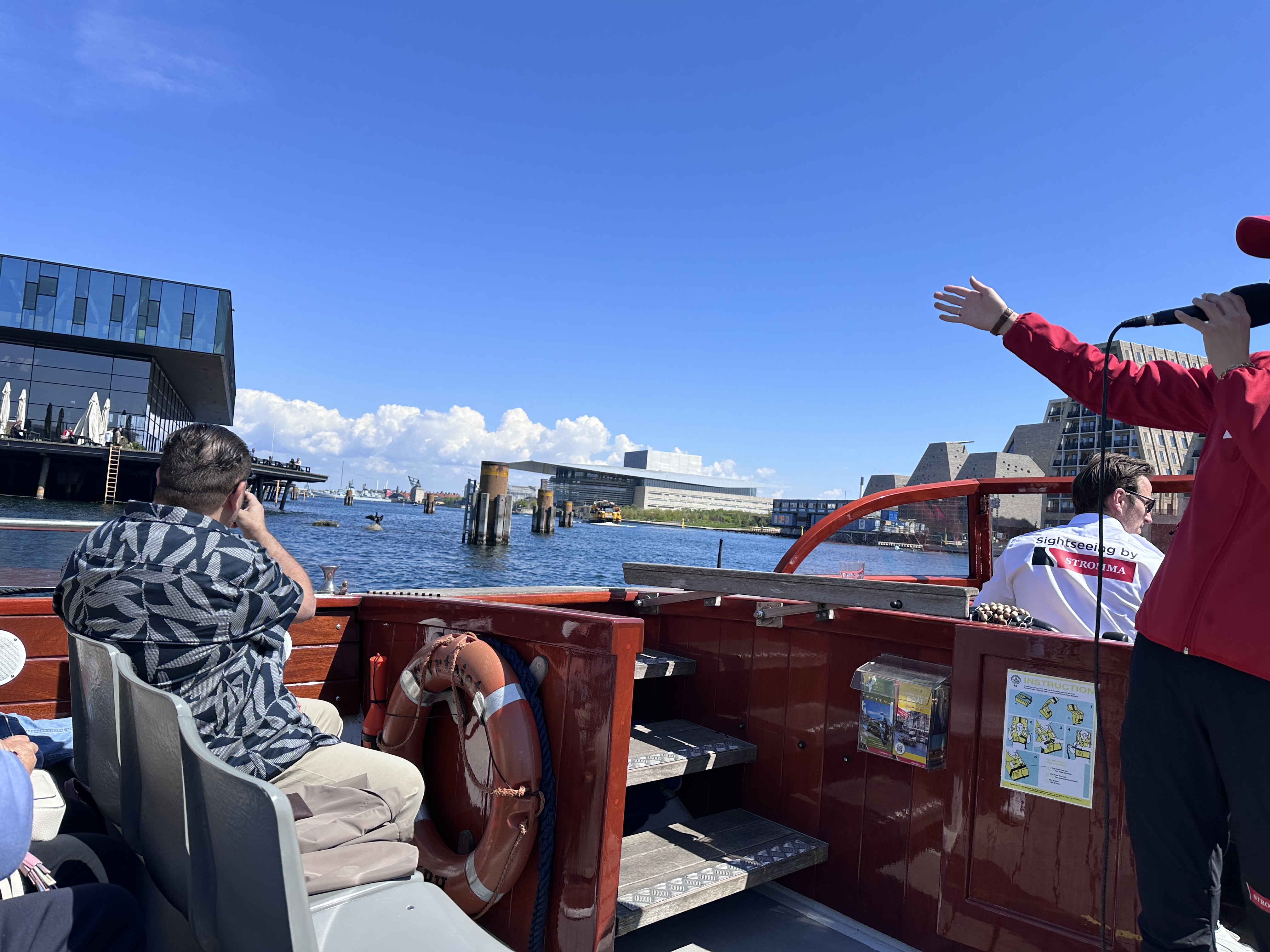 To gain immediate geographical context, we boarded an absolute must-do excursion: a classic canal boat cruise managed by Stromma Canal Tours. Departing from the head of the Nyhavn canal, these guided wooden boats cruise deep into the historic harbor. Our guide provided deep historical context as we slipped under low-slung bridges and past architectural monuments.
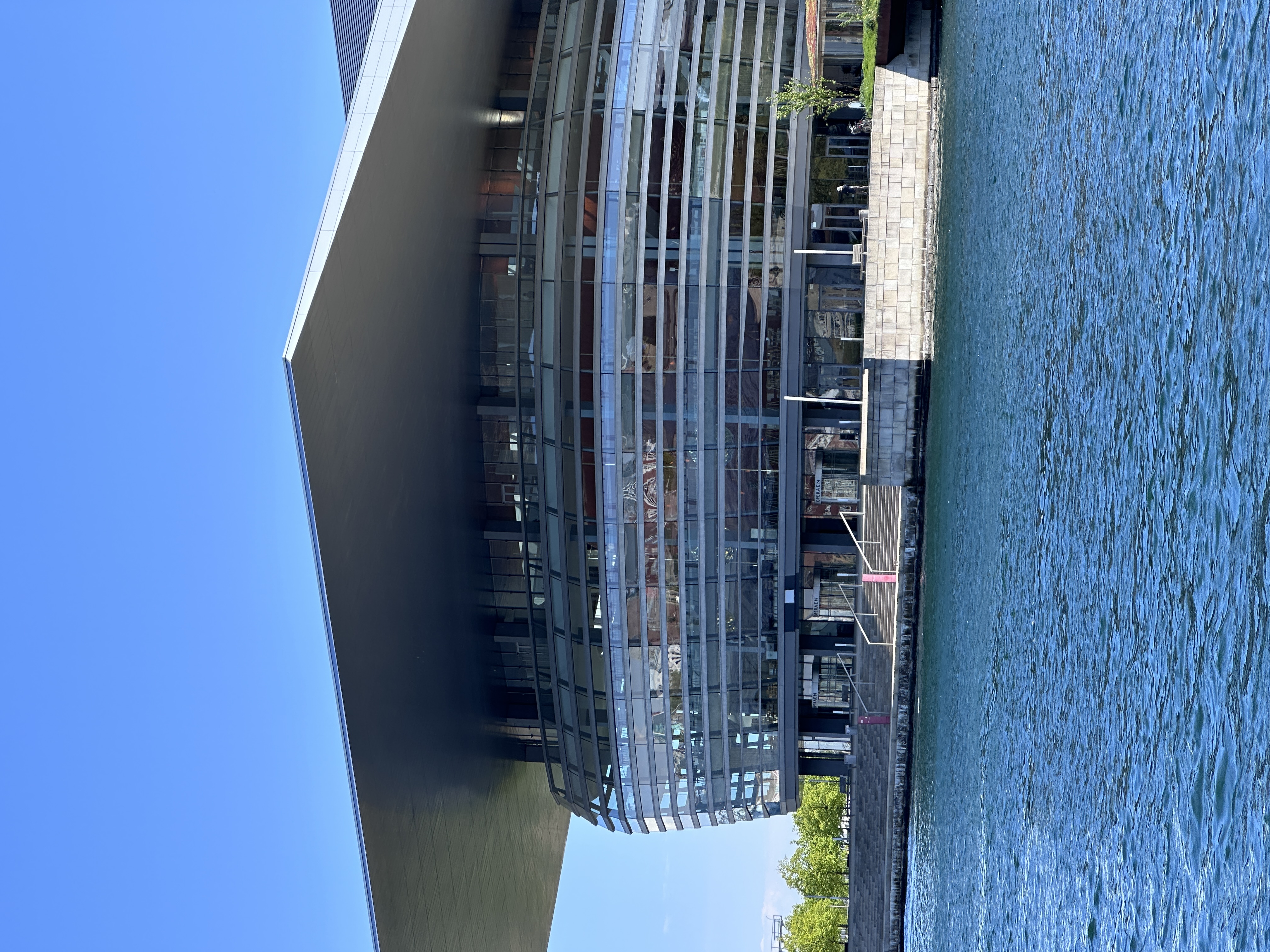
The cruise charts a course past the sprawling, granite-clad Christiansborg Palace, which is the current seat of the Danish Parliament, and navigates the picturesque canals of Christianshavn, modeled after Dutch waterways. We captured views of the famous twisted spire of the Church of Our Savior, the striking geometric facades of the Copenhagen Opera House, and the newly opened Operaparken green oasis.
 From the water, our guide pointed out Amalienborg Palace and the legendary Little Mermaid statue on her shoreline perch. Looking out toward the industrial harbor, the bold silhouette of CopenHill stands clear. This innovative waste-to-energy power plant features an artificial green ski slope built directly onto its roofline. Because Denmark is an entirely flat country devoid of natural mountains, this artificial peak provides locals with year-round alpine recreation.
Interesting Fact: If you love squeezing every last drop of exploration out of your day, Denmark's spring and summer daylight hours are an absolute dream come true. In May, the sun peeks out around 4:50 AM and does not set until close to 9:30 PM. On the Summer Solstice, which occurs on June 21, the season reaches its peak, with sunrise at 4:24 AM and sunset at 10:00 PM, offering a spectacular 17 hours and 37 minutes of continuous daylight to fuel your adventures.
Lunch at Hyttefadet
 Following our maritime tour, we paused for a classic lunch at Hyttefadet, an authentic tavern located right on the vibrant Nyhavn quay. Stepping off the waterfront cobblestones and into Hyttefadet reveals an intimate dining space brimming with historic maritime tavern charm. The interior welcomes weary travelers with its beautifully preserved exposed wooden beams and an eclectic collection of vintage nautical artifacts that whisper tales of Copenhagen's seafaring past.
While the indoor dining room offers a cozy refuge, the ultimate insider strategy is to request an outdoor patio table. Sitting open-air along the quay provides an uninterrupted vantage point to enjoy excellent harbor views and indulge in premier people-watching as a steady stream of wooden sailboats and onlookers glide down the main canal.
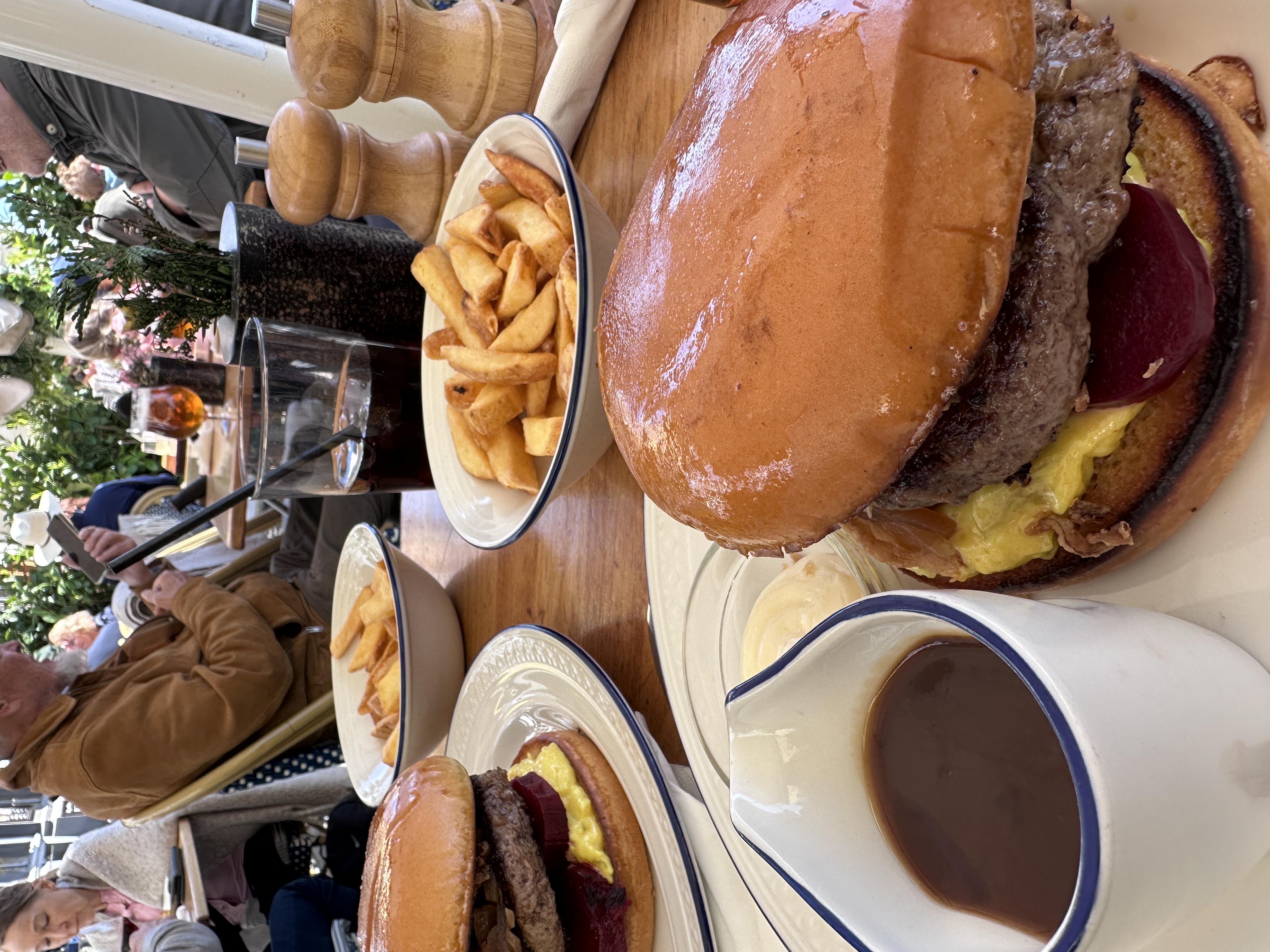
The undisputed centerpiece of the menu is the traditional Danish burger and fries, a magnificent departure from standard American variations. This authentic plate layers a perfectly seared, premium beef patty with sweet, tangy remoulade and a rich, savory splash of traditional brown gravy. The kitchen then builds contrasting textures by topping the meat with both soft caramelized onions and a mountain of crispy fried onions. The entire masterpiece is crowned with thick cuts of deeply pigmented, traditional pickled beetroot, creating an unforgettable culinary experience that perfectly balances sweet, savory, and sharp northern flavors.
King's Winter Palace (Amalienborg)
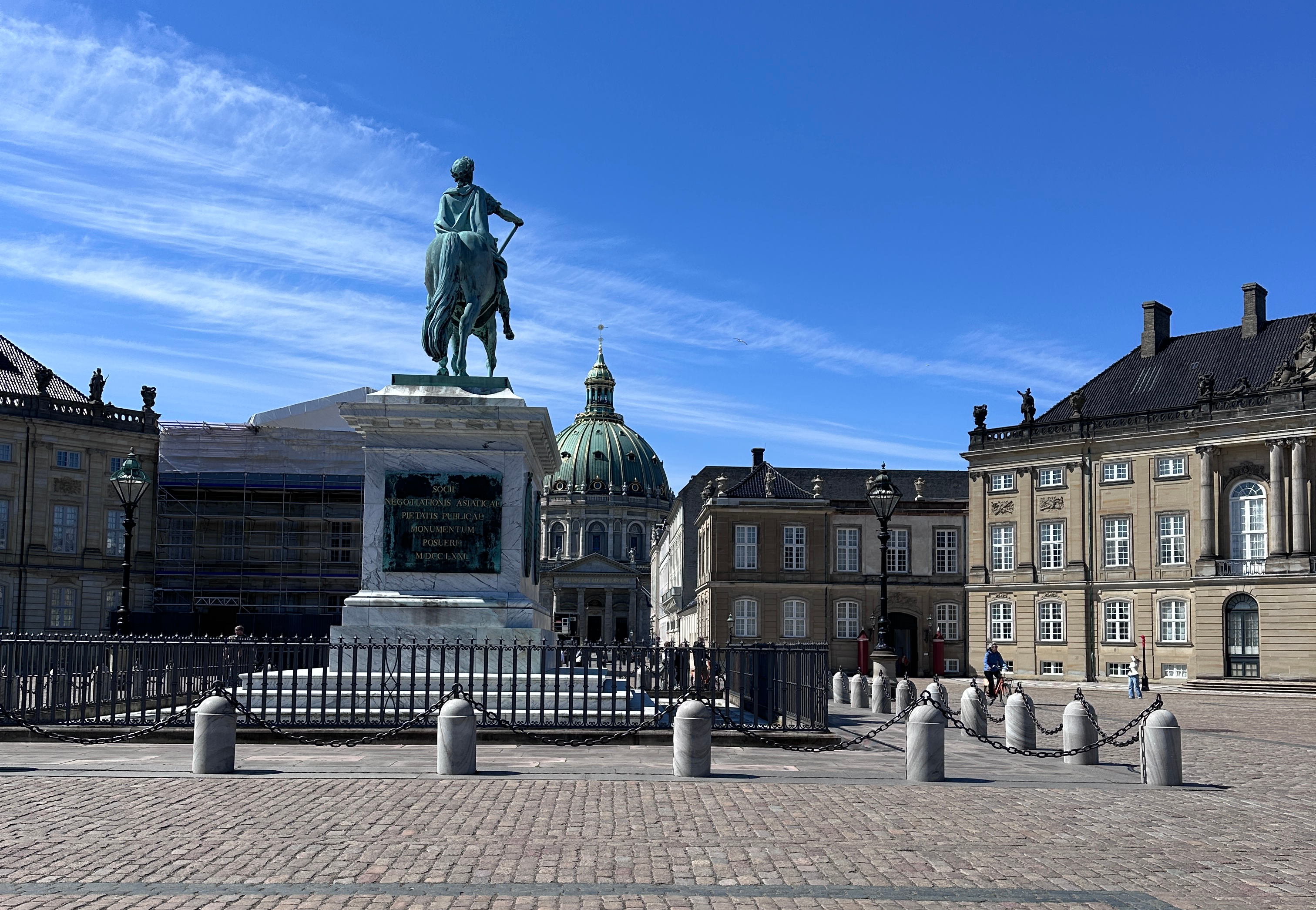 A short walk north along the harbor brought us to Amalienborg Palace, the official winter residence of the Danish Royal Family. The complex consists of four identical classic palaces arrayed around a grand octagonal plaza. At the absolute center stands the monumental French-crafted equestrian statue of King Frederick V, widely regarded as one of the finest neoclassical bronze sculptures in the world.
We timed our arrival perfectly to witness the Changing of the Guard ceremony. Every single day at noon, the Royal Life Guards, known locally as Den Kongelige Livgarde, complete their march from Rosenborg Castle through the city streets to execute this formal military ritual in the palace courtyard. Inside Christian VIII's Palace, the Amalienborg Museum offers visitors an intimate view of private royal apartments spanning generations, capped by a secure exhibit housing pieces of the historic Royal Jewels.
Frederik's Church (The Marble Church)
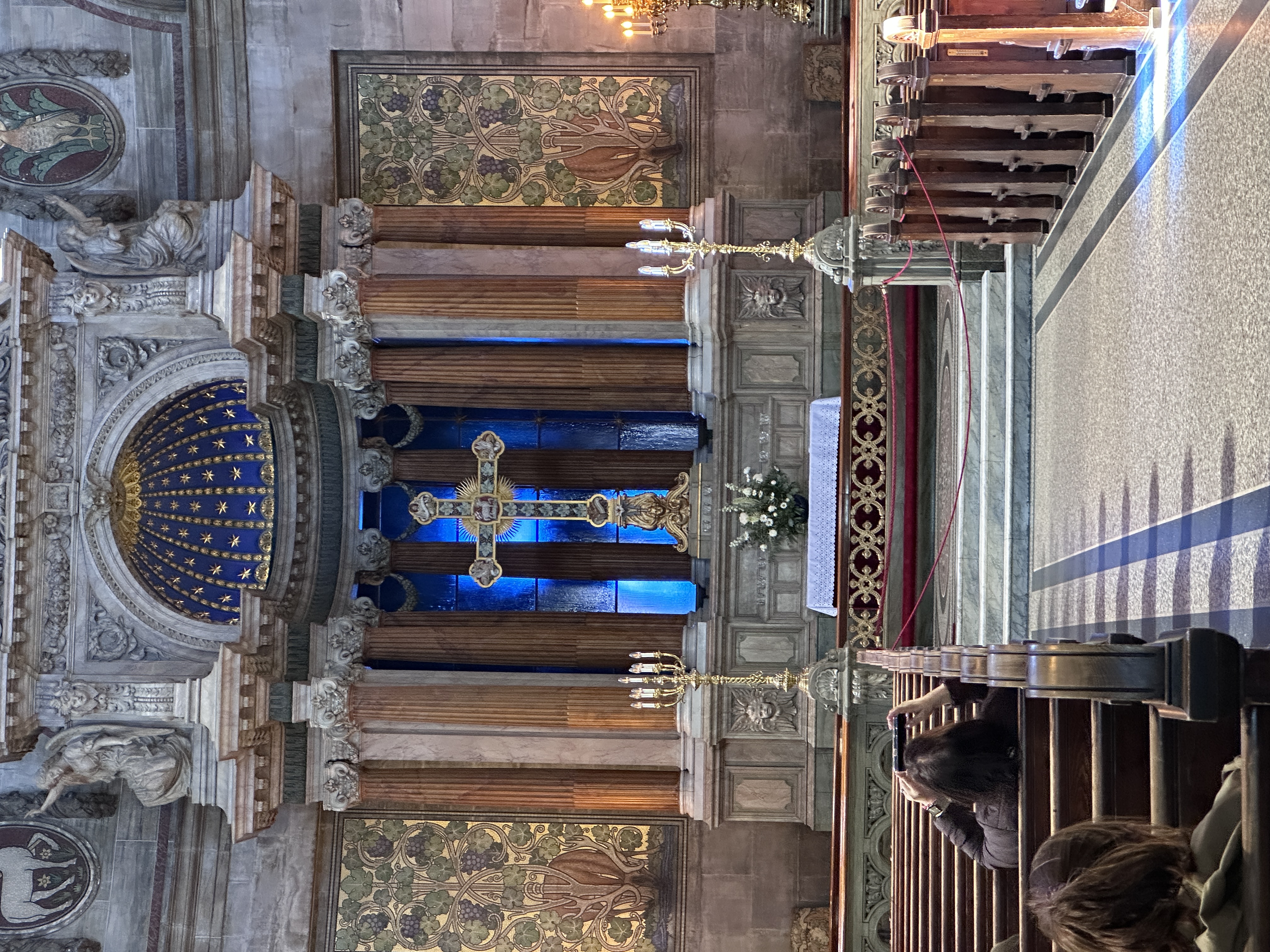 Anchoring the architectural axis directly behind the palace courtyard is Frederik's Church, universally known to locals as the Marble Church (Marmorkirken). The building features a monumental copper-green dome that spans 31 meters, directly inspired by St. Peter's Basilica in Rome.
Construction began in 1749 but ground to a halt for over a century due to budget constraints and the high cost of Norwegian marble. The structure was finally completed in 1894 using local limestone. Inside, the grand circular sanctuary features towering columns, stained-glass panels, and twelve frescoed paintings of the apostles lining the rim of the massive dome.
Gefion Fountain and Langelinieparken
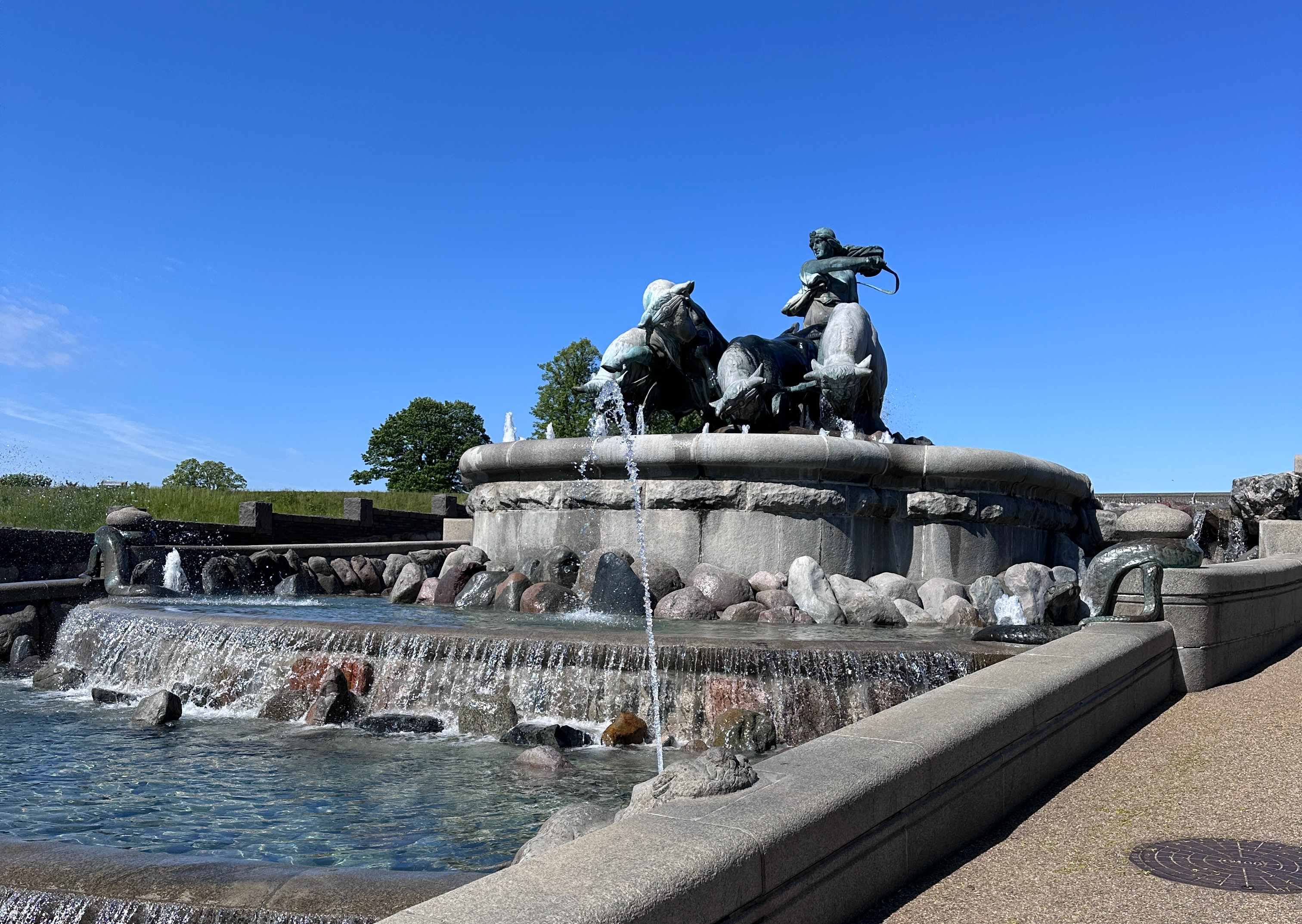 Continuing north, we arrived at the monumental Gefion Fountain, also known as Gefionspringvandet. This bronze installation, completed in 1908 by artist Anders Bundgaard, depicts the ancient Norse goddess Gefion aggressively plowing the sea with four massive oxen.
Norse Legend: Myth states that Gefion was promised as much land from the King of Sweden as she could plow in one single day. She transformed her four sons into powerful oxen, plowing a massive chunk of land out of Sweden and tossing it into the ocean. This legendary act created the main island of Zealand, where Copenhagen sits today, leaving Lake Vänern in Sweden behind.
The fountain marks the grand entrance to Langelinieparken, a sprawling waterfront park filled with mature trees, reflective lakes, a historic nineteenth-century windmill, and various military monuments.
Little Mermaid
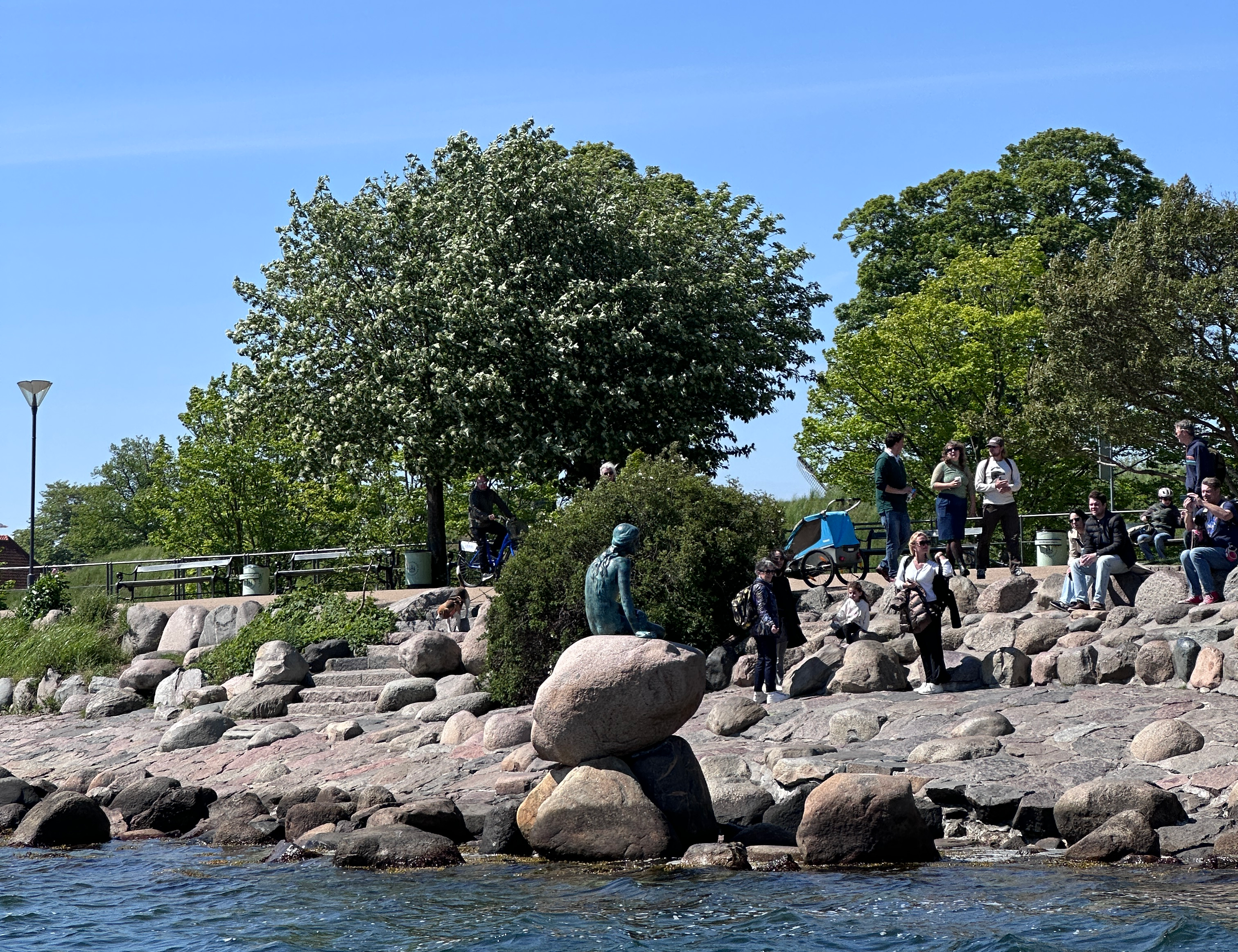 Following a short walk along the promenade, we reached the iconic Little Mermaid statue, or Den Lille Havfrue. Unveiled in 1913 as a gift from brewer Carl Jacobsen, this bronze tribute to Hans Christian Andersen's classic fairy tale often surprises first-time travelers. The statue is notably small, sitting on a simple shoreline boulder, and the viewing area is routinely packed with tour groups.
The statue has also been a frequent target of political vandalism over the decades. Her head was completely severed and stolen in 1964 and again in 1998, her right arm was amputated in 1984, and the entire figure has been repeatedly doused in red, blue, and green paint to protest various global causes. Despite these challenges, she has been meticulously restored every single time to resume her watch over the harbor.
Rosenborg Castle and the King's Garden
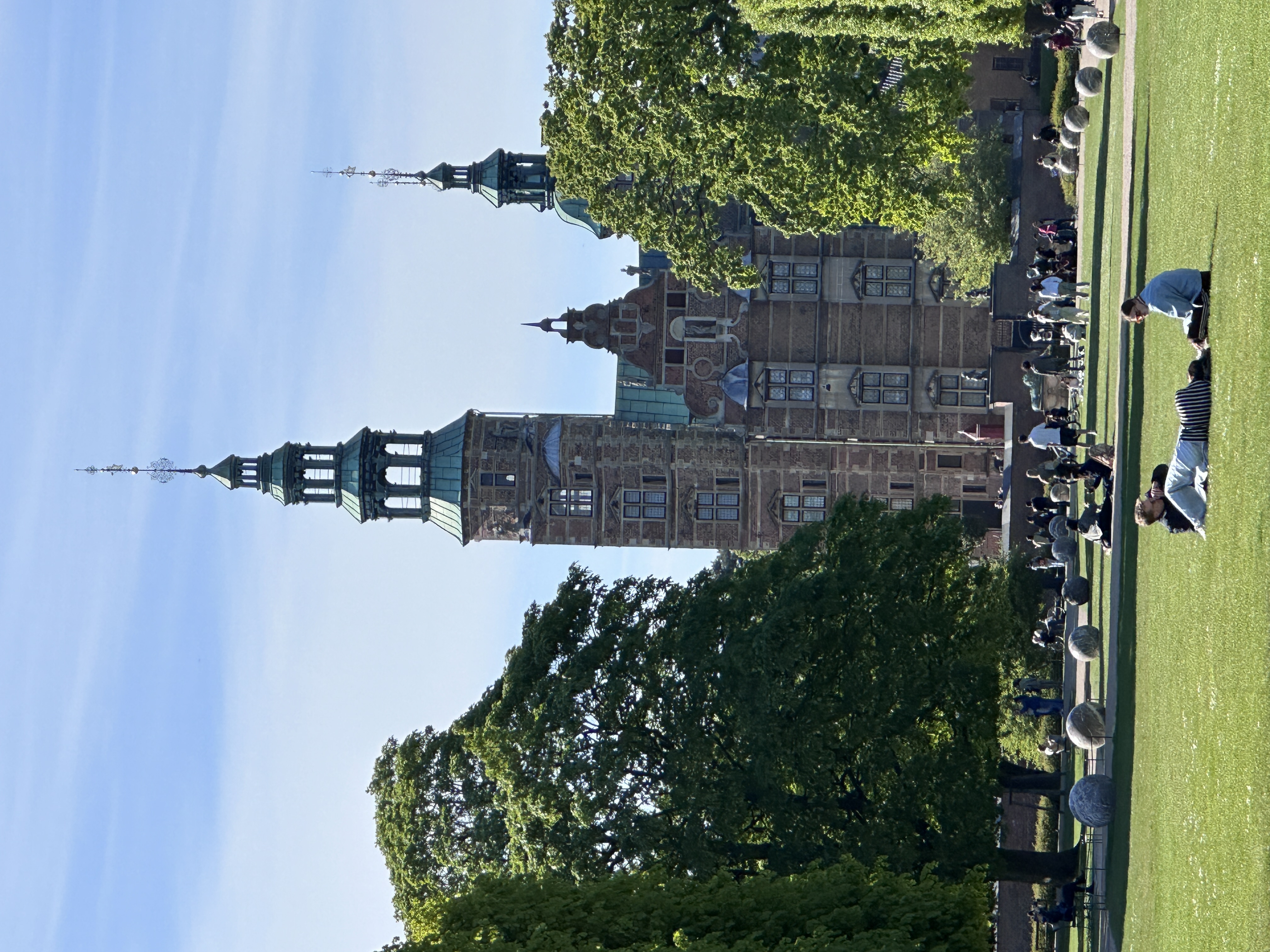 We trekked back through the historic city streets to reach King's Garden, or Kongens Have, the oldest and most visited municipal park in Copenhagen. Developed in the early seventeenth century under King Christian IV, these grand Renaissance gardens feature manicured tree-lined avenues, rose gardens, and large bronze statues.
The green lawns frame the magnificent Rosenborg Castle, a red-brick Dutch Renaissance palace built as a royal summer residence. Today, the castle serves as a museum, holding the official Crown Regalia and coronation thrones.
After exploring the grounds, we stopped for a restful afternoon break at Orangeriet, a sophisticated greenhouse café located directly on the park borders. It is an ideal spot to sit back with an artisan espresso and fresh Danish pastries while admiring views of the palace walls.
Tivoli Gardens
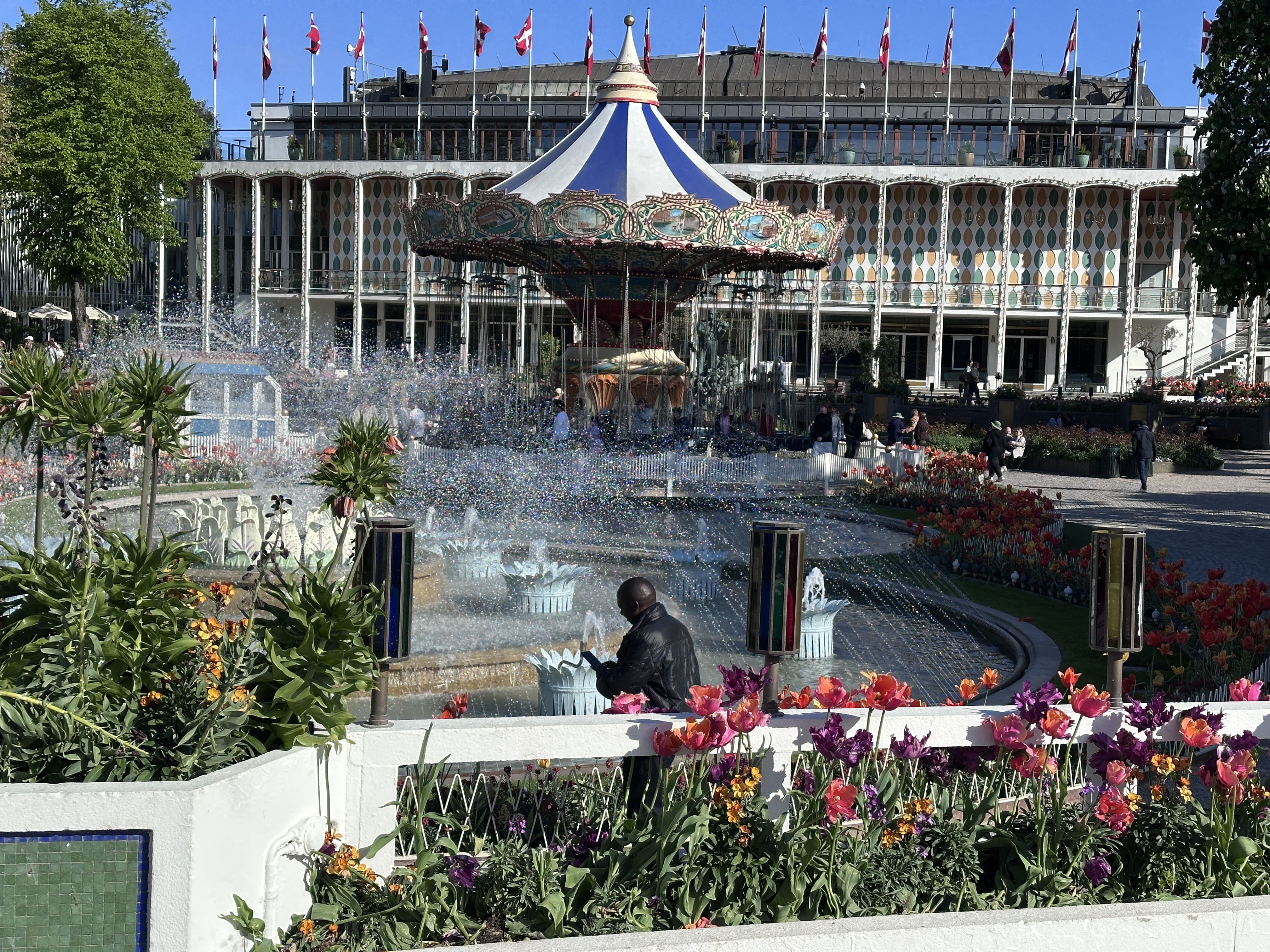 As evening approached, we made our way to the world-famous Tivoli Gardens. Opened on August 15, 1843, Tivoli is celebrated as the second-oldest operating amusement park on earth. The oldest park, Dyrehavsbakken, sits just north of Copenhagen in Klampenborg.
Historical Inspiration Trivia: During a European tour in 1951, Walt Disney spent days at Tivoli Gardens, taking detailed notes on its clean, family-friendly atmosphere, lush gardens, nighttime illumination, and sophisticated dining. This specific experience directly shaped his early conceptual designs for Disneyland in California.
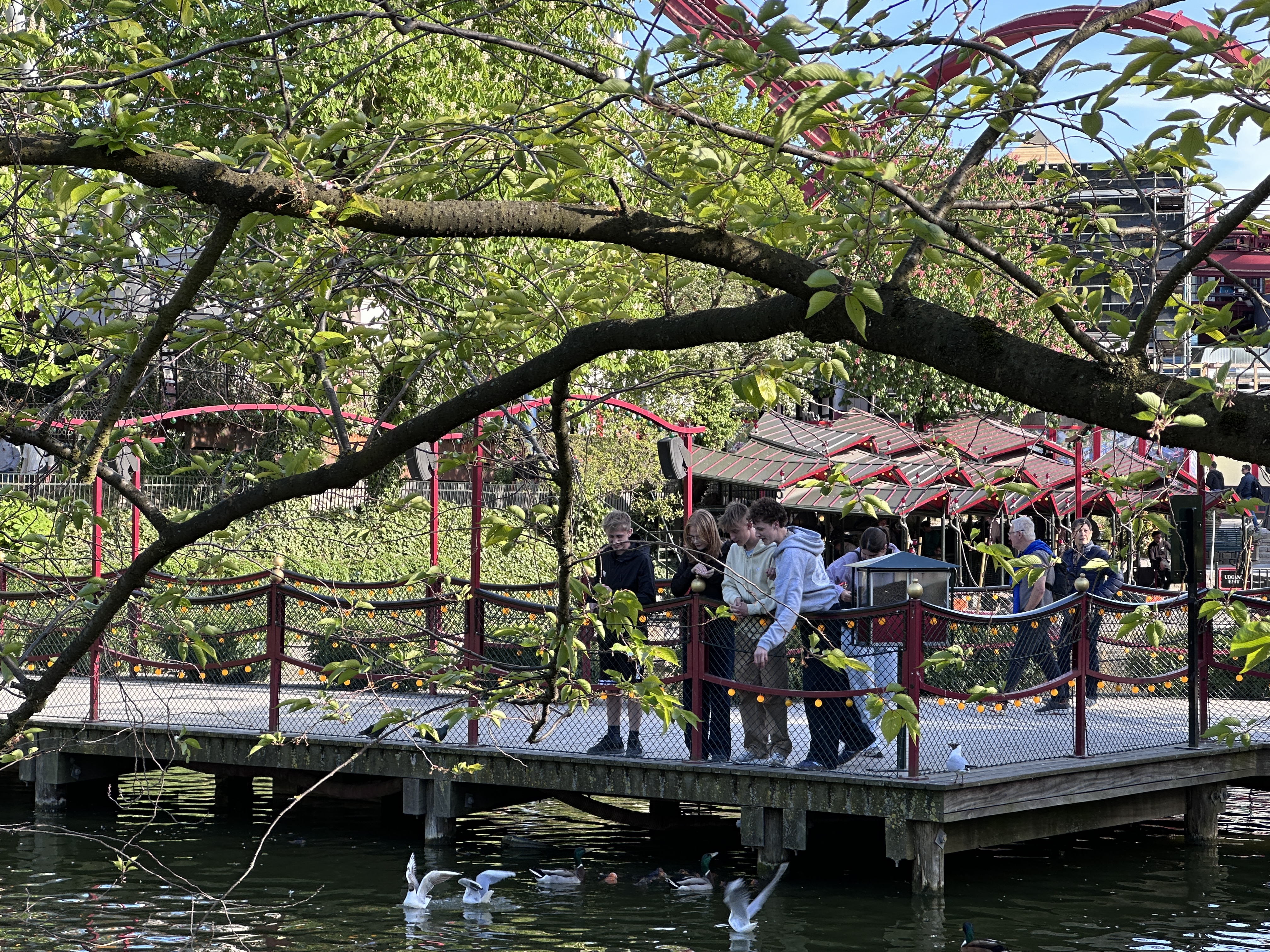 Tivoli is a magnificent blend of historic charm and modern thrills. It features wooden roller coasters alongside modern rides, concert halls, open-air pantomime theaters, and manicured flower beds. A peaceful, central lake offers a quiet escape populated by resident ducks and classic wooden paddleboats.
At night, this same body of water becomes the staging ground for the Tivoli Illuminations show, a dazzling display that combines lasers, synchronized fountains, dramatic music, and pyrotechnics.
Church of Our Savior
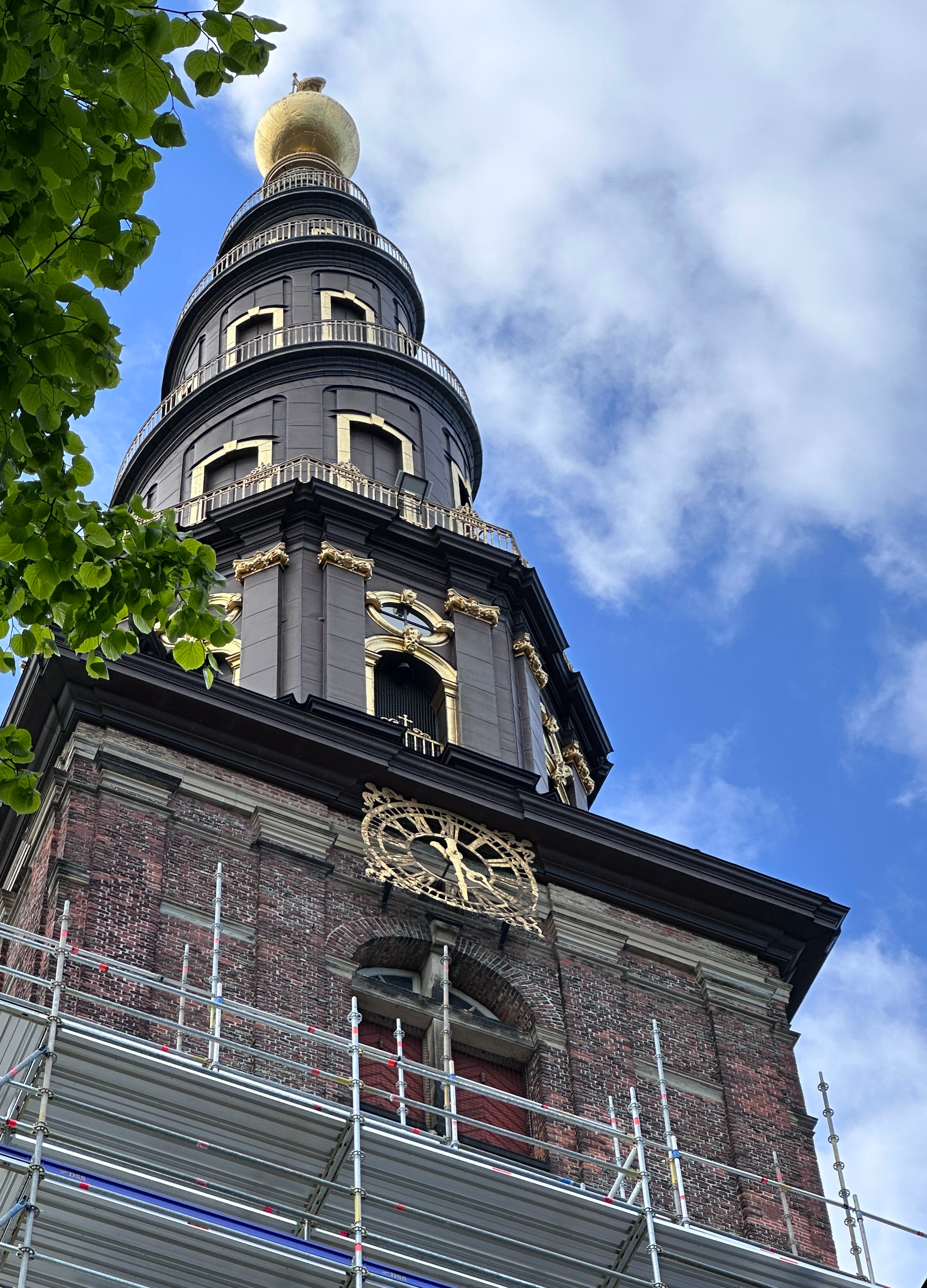 Located in the trendy district of Christianshavn, the baroque Church of Our Savior, known locally as Vor Frelsers Kirke, is famous for its external spiral staircase. The black-and-gold helix spire climbs 90 meters into the skyline.
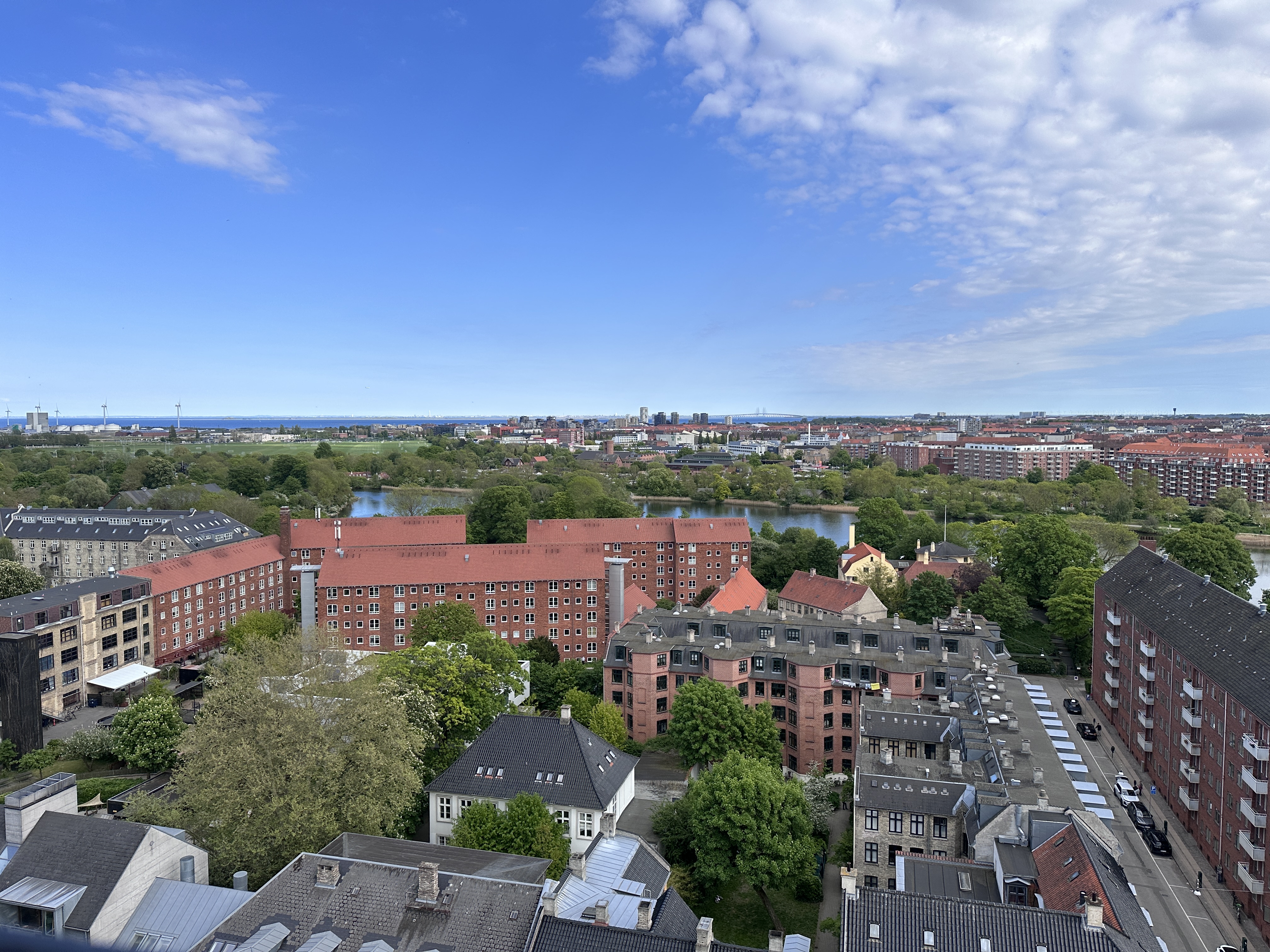 For brave travelers, a four-hundred-step staircase climbs to the very peak, with the final hundred and fifty steps wrapping around the entirely exposed exterior of the spire. As you climb the wooden internal support beams, you will pass a massive collection of forty-eight bronze bells stacked across multiple tiers.
This historic carillon is recognized as the largest in northern Europe, playing melodic classical tunes every hour from 8:00 AM until midnight.
Tycho Brahe Planetarium
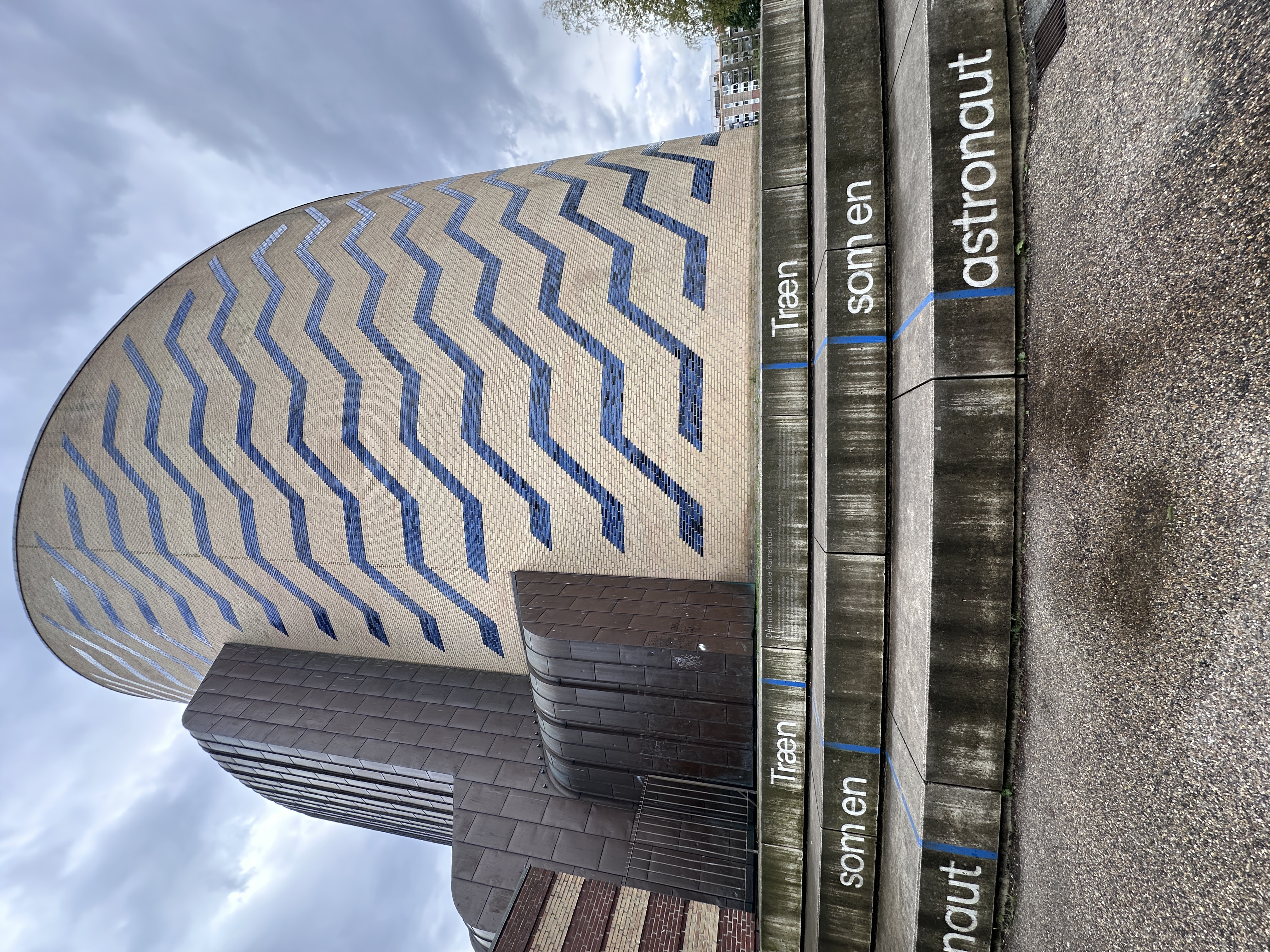 For science enthusiasts, a visit to the Tycho Brahe Planetarium offers a fantastic educational escape. Located at the southern tip of Sankt Jørgens Sø, also known as Saint George's Lake, the striking cylindrical structure was designed by architect Knud Munk to echo the infinite nature of the cosmos.
The building frames Copenhagen's historic Inner Lakes, locally referred to as Søerne. This row of three historic rectangular lakes is divided into five basins that trace the city's ancient defensive fortifications and serve today as a favorite recreational path for local runners and strollers.
Inside the planetarium, the center attraction is Europe's largest tilted Dome Theatre, featuring an immersive one-thousand-square-meter screen. We watched two spectacular features: Touch the Stars, an incredible deep-space tour of our solar system, followed by Space: The New Frontier, an engineering documentary focused on structural designs for future Mars exploration.
Sound Advice: While all dome films are narrated in Danish, international travelers can request complimentary wireless headphones and English-language audio receivers at the front desk.
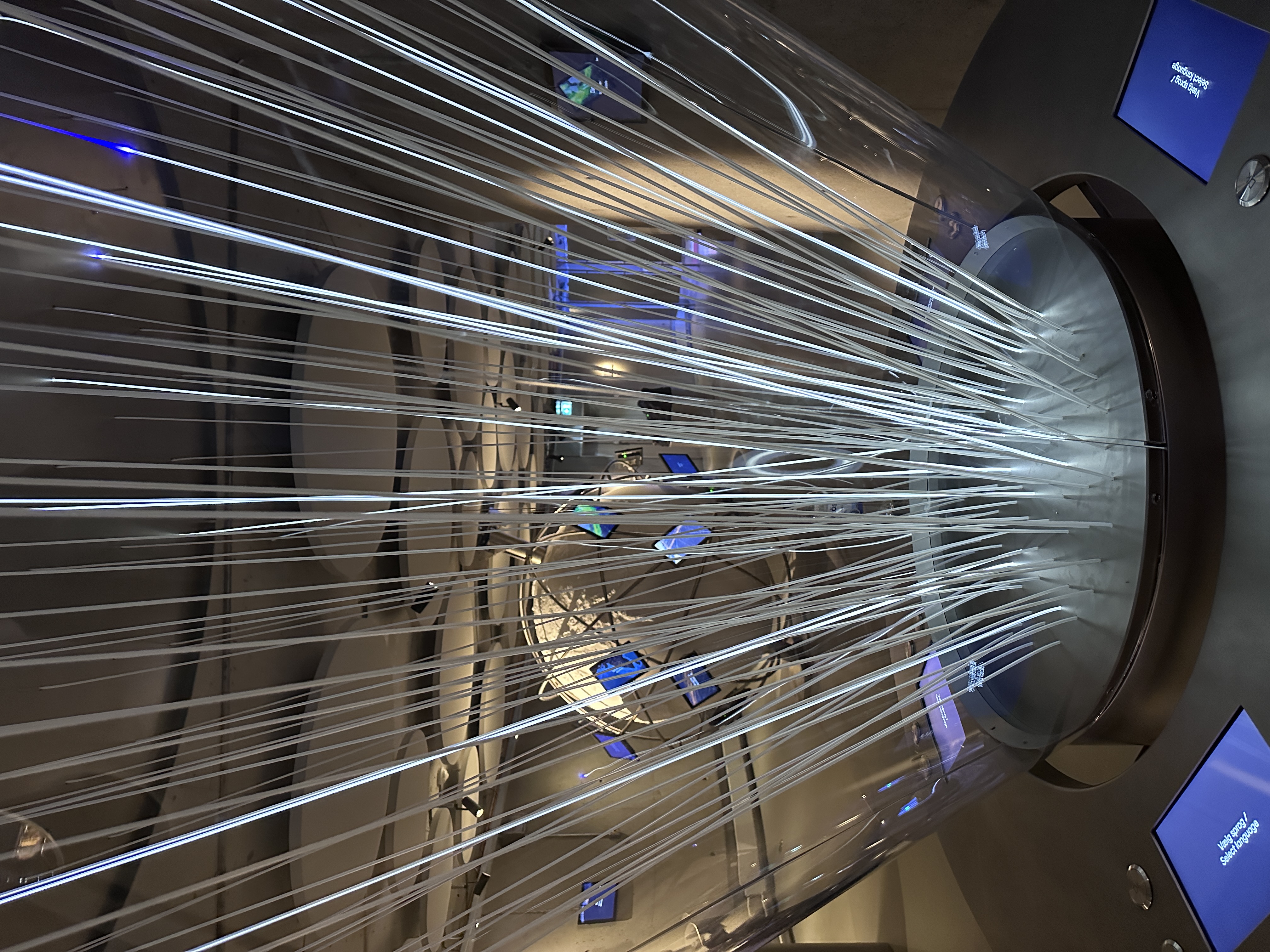 The primary exhibition floor features cutting-edge interactive galleries. The permanent Cosmos exhibition displays authentic meteorites and the largest genuine lunar rock specimen on display outside the United States, brought back to Earth by the Apollo 17 mission in 1972.
Our favorite feature was a dedicated relaxation zone where you lie flat on your back to gaze up at a high-definition rotating projection of the Earth, capturing the exact spatial perspective of an astronaut floating inside the International Space Station.
Magstræde and Old Town
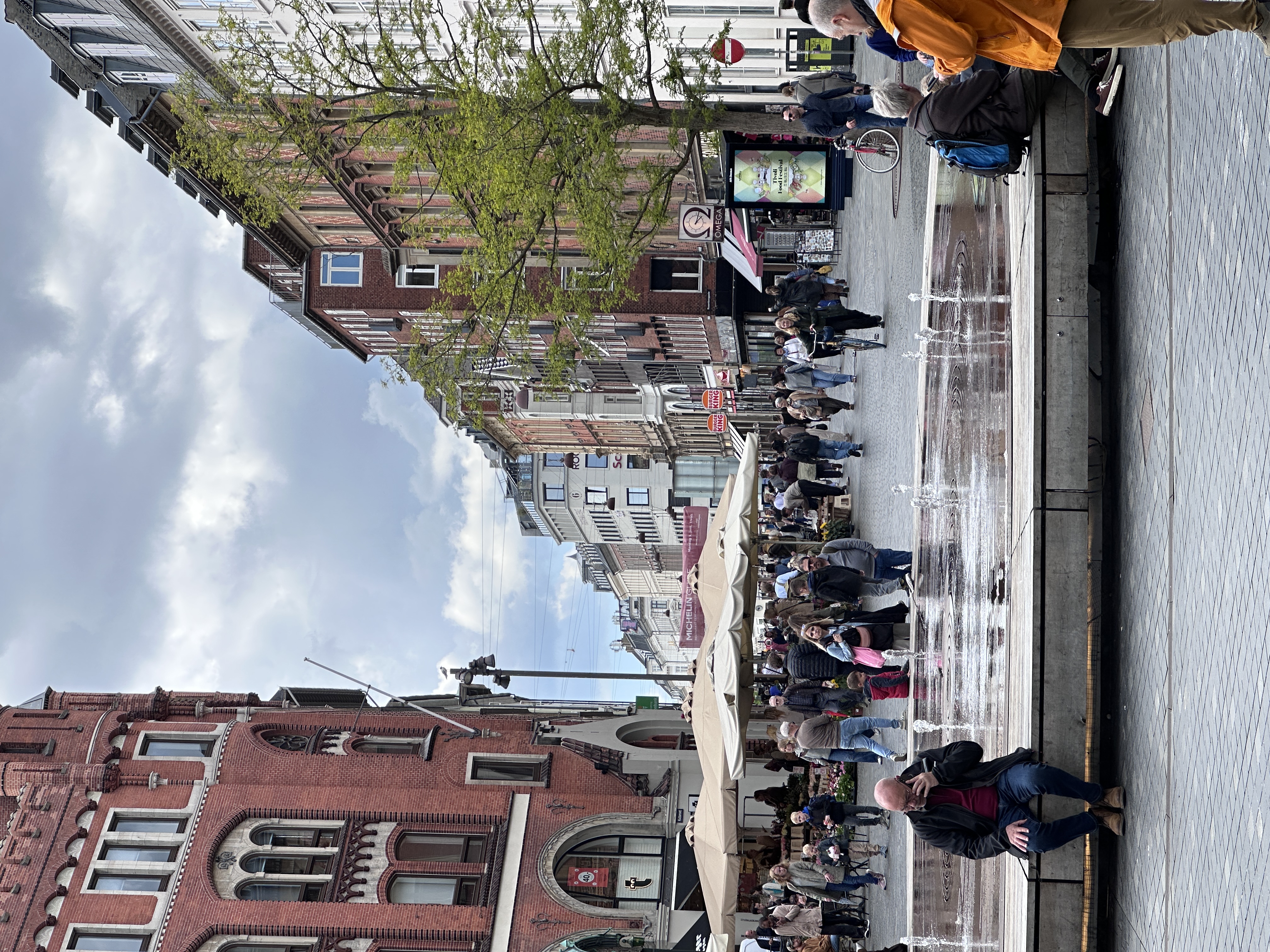 To experience old-world Copenhagen, we took a short walk from the Gammel Strand Metro station to Magstræde. This narrow passageway is one of the oldest streets in the historic center, miraculously surviving the devastating fires that struck the city in 1728 and 1795.
The lane features uneven, authentic cobblestones and beautifully preserved townhouses painted in deep ochre, terracotta, and crimson tones, dating back to the late eighteenth century.
More to see in Copenhagen
For families and wildlife enthusiasts, the city offers several premier science and nature destinations located just outside the immediate city center:
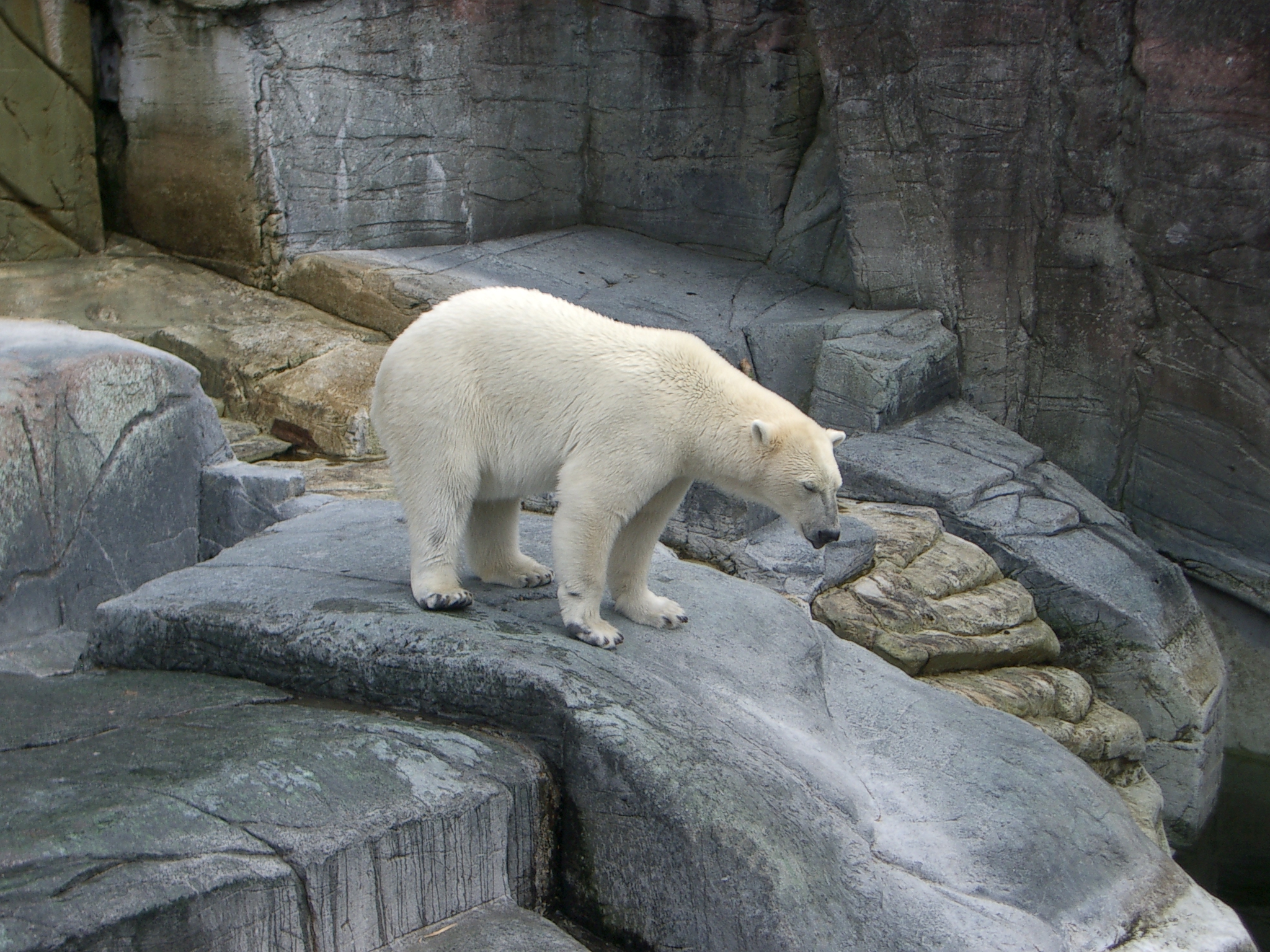
 Copenhagen Zoo: Situated in Frederiksberg, this historic institution opened in 1859 and ranks as one of Europe's oldest zoos. It is internationally acclaimed for its state-of-the-art Elephant House, designed by Norman Foster, and a specialized Arctic Ring exhibit where visitors walk through an underwater acrylic tunnel to view polar bears swimming directly overhead.
- The Botanical Garden and Palm House: Part of the Natural History Museum of Denmark, this complex houses twenty-seven historic greenhouses dating back to 1874. The centerpiece is the grand, towering Palm House, featuring narrow cast-iron spiral staircases that allow travelers to climb high into the humid canopy to examine rare tropical flora from above.
- The Museum of Illusions: Located directly on the Strøget pedestrian mall, this highly interactive museum features hands-on rooms dedicated to physics, geometry, and optical illusions. It offers a fun, mind-bending family experience filled with unique perspective-shifting photo opportunities.
- The Round Tower (Rundetaarn): A seventeenth-century astronomical tower featuring a wide, equestrian spiral ramp built so King Christian IV could ride a horse-drawn carriage to the summit observatory.
- The National Museum of Denmark (Nationalmuseet): The country's premier cultural history museum, housing priceless prehistoric artifacts, rune stones, and genuine Viking weaponry.
- King's New Square (Kongens Nytorv): The grandest square in the city, bordered by the Royal Danish Theatre and the historic Charlottenborg Palace.
- The Glyptotek (Ny Carlsberg Glyptotek): A world-class art museum built around the private collection of Carl Jacobsen, featuring ancient Mediterranean sculptures and a lush central winter garden.
Accommodations
During our trip, we chose to stay at the Rox Resort in Køge, a 30 km train ride from the capital - read about our stay later in this guide.
 However, for travelers who prefer to stay directly within the city center, here are several excellent alternatives:
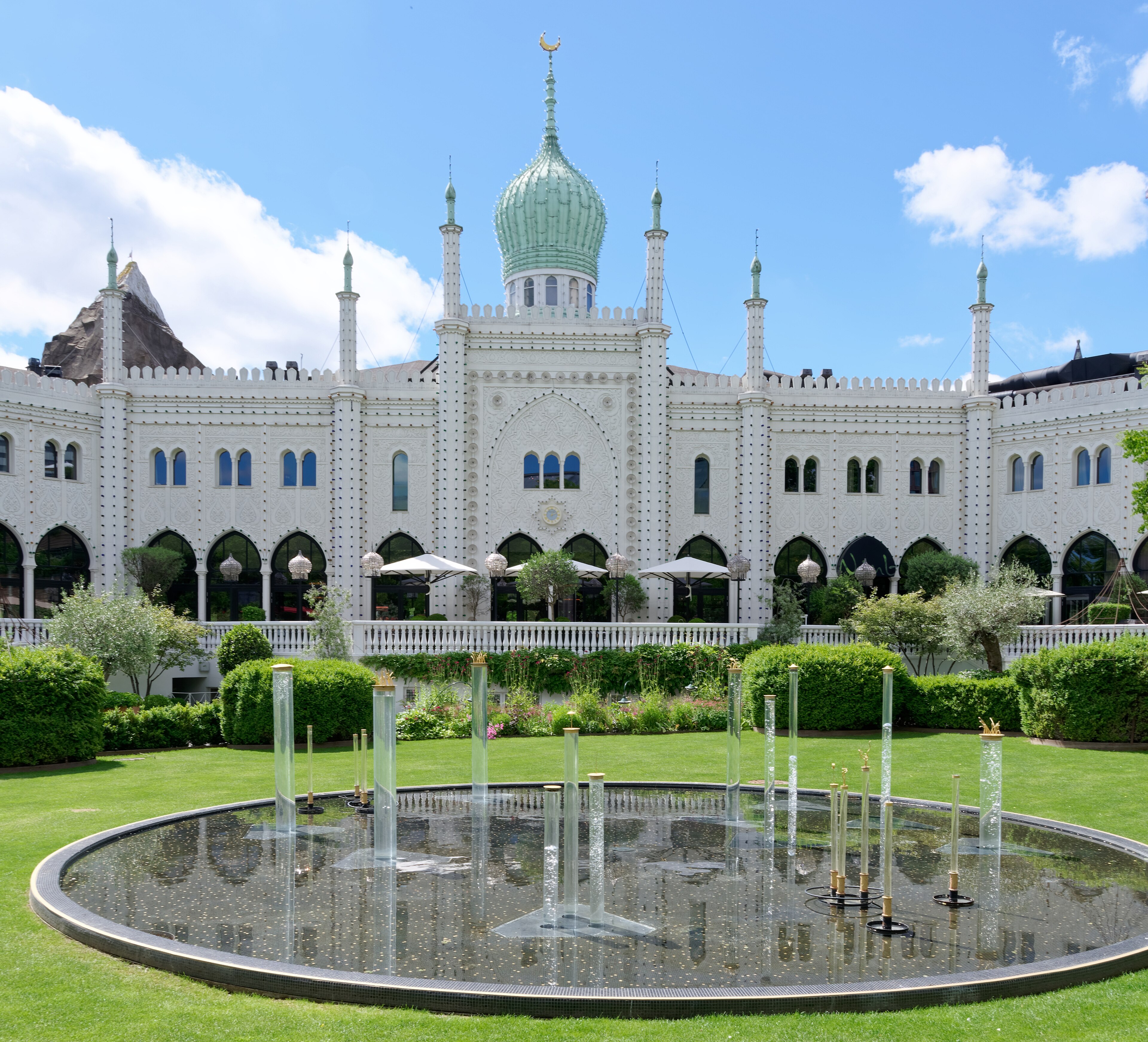
- The Nimb Hotel: A luxury boutique hotel located directly inside Tivoli Gardens, featuring striking Moorish-inspired architecture and premium views of the evening illuminations.
- Hotel d'Angleterre: A historic, ultra-luxury grand dame property anchoring Kongens Nytorv, perfect for immediate access to the Strøget shopping district and the Nyhavn waterfront.
- Hotel Alexandra (Tivoli / Central District): A magnificent choice for anyone who appreciates mid-century modern aesthetics. Instead of generic hotel decor, this property pays homage to classic Danish design legends, featuring rooms uniquely furnished with authentic retro pieces, vintage lamps, and textiles. It feels like a living design museum, yet it sits just a short walk from Copenhagen Central Station and Tivoli Gardens.
- citizenM Copenhagen Rådhuspladsen (City Center): If you value tech-savvy convenience and a lively atmosphere, this property is a modern home run. It eliminates the traditional front-desk friction with self-service kiosks, while the compact, highly optimized rooms feature wall-to-wall windows and full electronic tablet controls. The open-plan lobby is packed with bright contemporary art by local creators, making it an excellent hub for a morning espresso.
- Ibsens Hotel (Nansensgade Neighborhood): Located just a few blocks from the historic Inner Lakes and the vibrant Torvehallerne food market, this family-owned hotel offers an authentic slice of local Copenhagen life. It operates on an eco-friendly ethos, highlighting local artisans and fabrics throughout its cozy, welcoming interior. It is an exceptional choice if you prefer a relaxed, neighborhood community feel over the bustling tourist center.
- Wakeup Copenhagen (Bernstorffsgade or Borgergade): Designed by the renowned Danish architect Kim Utzon, this eco-certified property is a masterclass in crisp, high-functioning minimalism. It focuses entirely on clean lines, excellent natural lighting, and zero-fuss logistics. While the standard rooms are compact, booking a higher-floor room grants spectacular panoramic views across the city skyline at a fraction of the cost of legacy hotels.
Coastal Excursions North of the Capital
Utilizing our transit pass, we ventured north along the scenic coastline of Zealand to explore premier art installations and royal strongholds.
Humlebæk: Louisiana Museum of Modern Art
 Located 35 kilometers north of Copenhagen, in the coastal town of Humlebæk, the Louisiana Museum of Modern Art perfectly balances international masterworks with stunning natural surroundings.
Intriguing Marital Fact: The estate owes its unique name to its original owner, Alexander Brun, a Master of the Royal Hunt who built the villa in 1855. Brun famously married three separate times throughout his life. In an incredible twist of fate, all three of his wives were named Louise, which inspired him to permanently name the villa Louisiana.
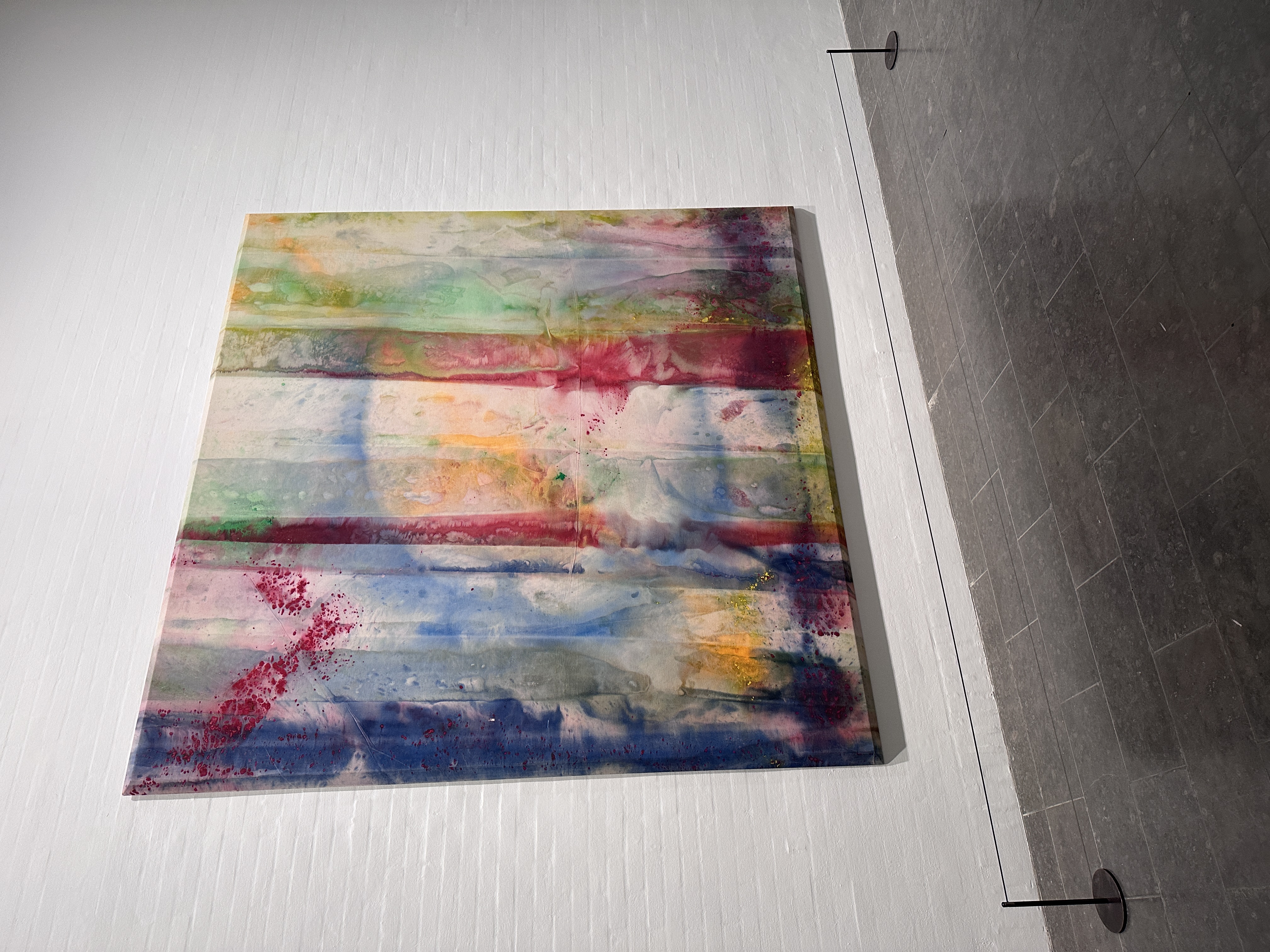
 The museum's structural design connects modernist glass galleries with the original historic villa. Inside, the halls showcase works by icons like Alberto Giacometti and Yayoi Kusama.
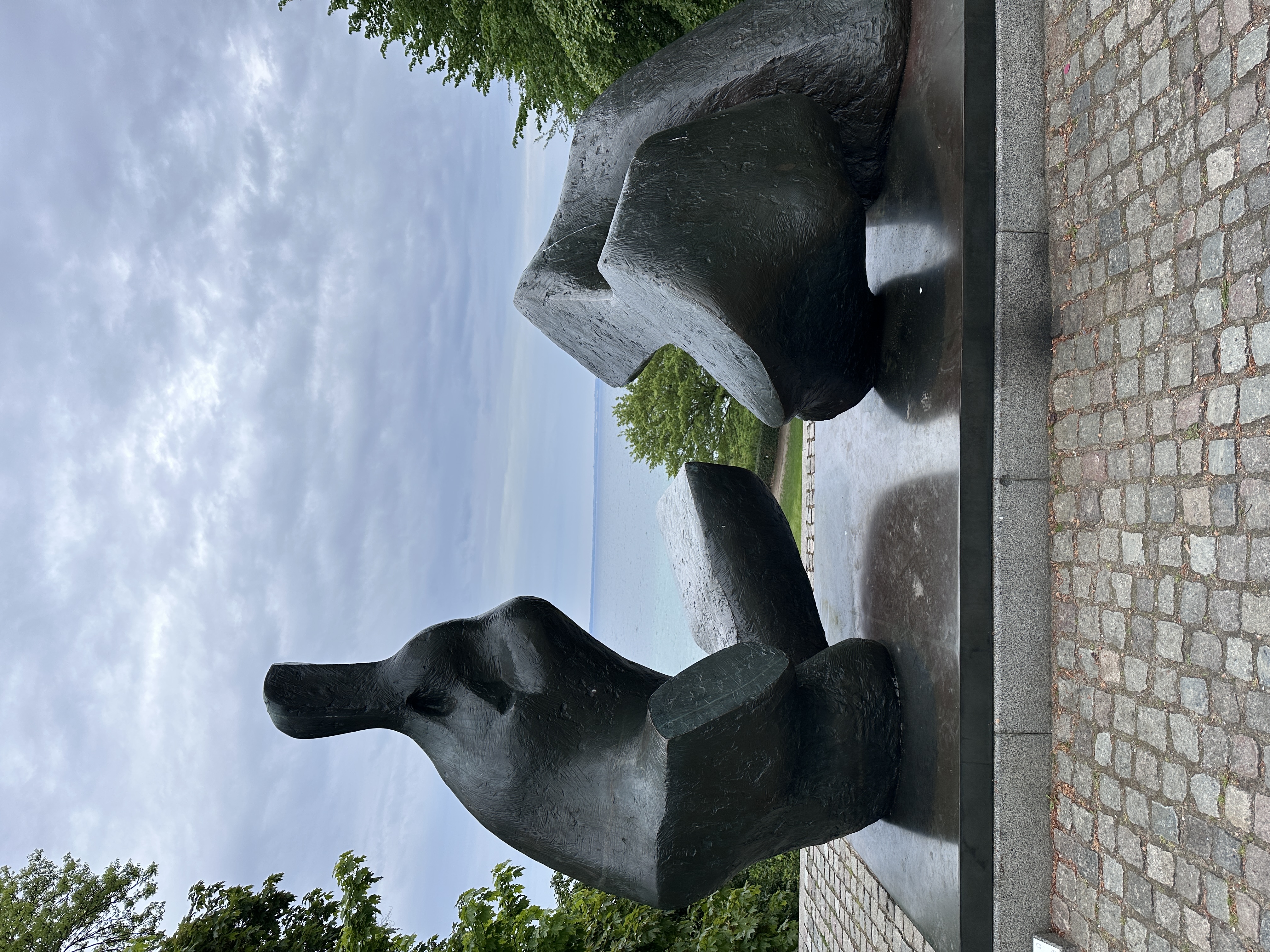
The true magic of Louisiana is found outdoors in its sweeping seaside sculpture garden. Grassy hills feature works by Henry Moore and Alexander Calder, sloping gently down toward the shores of the Øresund Sound. On a clear day, travelers can look across the blue water to view the coastline of Sweden. Wooded footpaths wind past hidden installations, leading down to a pebble beach.
Coastal Culinary Artistry at Restaurant Sletten
 While the Louisiana Museum of Modern Art features an excellent panoramic café, we opted for a short, scenic walk to the nearby historic harbor of Sletten Havn. Our destination was the highly regarded Restaurant Sletten, a spectacular waterfront gem that holds a coveted Michelin recommendation.
The venue beautifully marries rustic maritime charm with sleek, minimalist Scandinavian design. Large windows look right out over the bobbing fishing boats, creating an intimate connection to the sea.
Navigating the menu comes with a unique insider twist. Every single dish arrives in a starter-sized portion, allowing you to sample multiple flavor profiles without feeling overwhelmed. The kitchen explicitly recommends ordering three separate plates per person to construct a perfectly personalized lunch tasting menu.
We crafted our meal around the day's fresh catch and rich, comforting seasonal flavors. We began by sharing the raw marinated halibut, which was beautifully balanced with grilled lemon and fresh sorrel. Next came the signature Sletten lobster bisque, a wonderfully rich soup garnished with crisp radish and tender new potatoes.
We rounded out our seaside feast with a perfectly crisped fried terrine. This magnificent dish featured rich veal sweetbreads and earthy morel mushrooms, all brought together in a luxurious, decadent Vin Jaune reduction. It served as the perfect midday reward on our coastal Danish trek.
Elsinore: Kronborg Castle
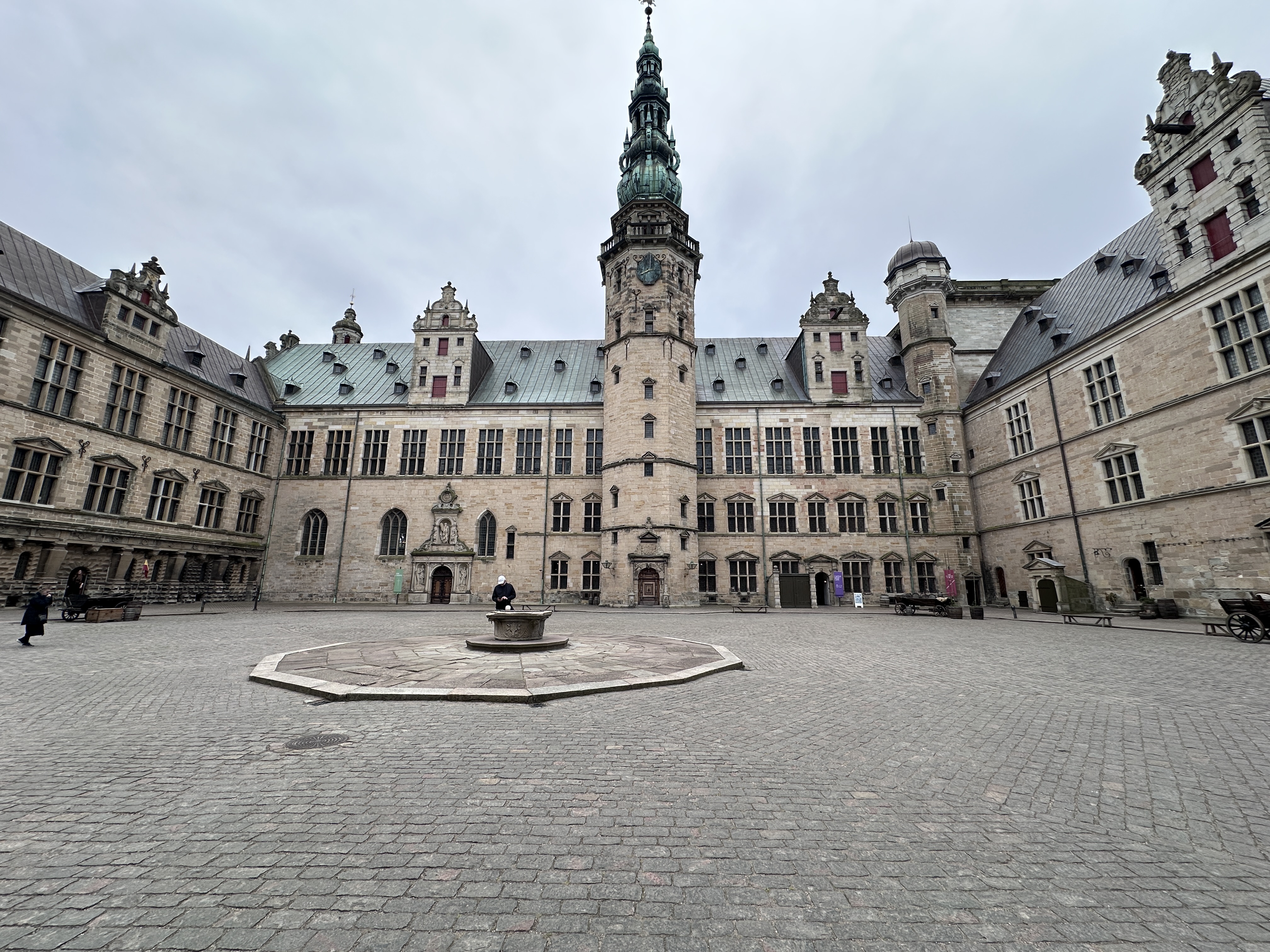 Positioned at the narrowest point of the Øresund Sound in Helsingør, known internationally as Elsinore, Kronborg Castle stands as an imposing maritime stronghold.
This Renaissance fortress features sandstone facades, copper spires, and a massive central courtyard surrounded by thick defensive bastions. For centuries, the castle served as a strategic military outpost, collecting lucrative Sound Dues, or Øresundstolden, from every foreign merchant ship entering the Baltic Sea.
Kronborg is immortalized worldwide as the fictional setting of Elsinore in William Shakespeare's masterwork tragedy, Hamlet. The castle embraces this literary connection every summer during the annual Shakespeare Festival, when international theater troupes perform Hamlet on an open-air stage built directly within the grand cobblestone courtyard.
Legend of the Casemates: Visitors can explore multiple levels of the fortress, descending into the dark, subterranean casemates where the mythic stone statue of Holger Danske sits waiting to awaken if the Danish nation ever faces existential danger.
Historic Exploration in Roskilde
 Heading west from Copenhagen brought us to Roskilde, an ancient city that served as the nation's capital during the legendary Viking Age and the early medieval era.
Viking Ship Museum
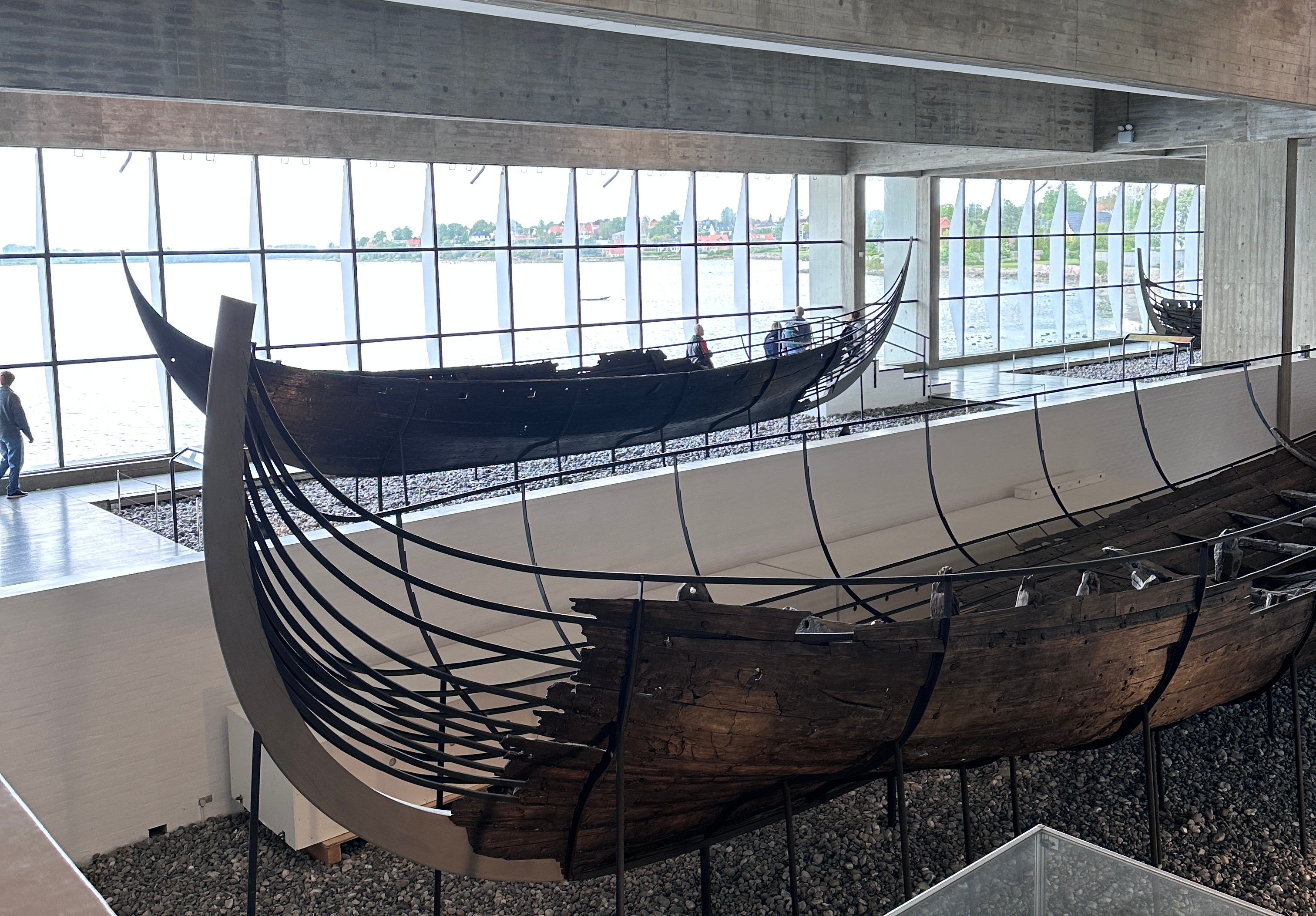
Perched directly on the banks of the scenic Roskilde Fjord, the Viking Ship Museum, known as Vikingeskibsmuseet, is a premier destination for ancient maritime history.
The centerpiece exhibition hall houses the Skuldelev ships, five distinct Viking vessels excavated from the fjord floor in 1962. Around the year 1042, local Vikings intentionally sank these watercraft at a narrow channel bottleneck to create a defensive underwater blockade, successfully protecting their wealthy trading capital from naval attacks.
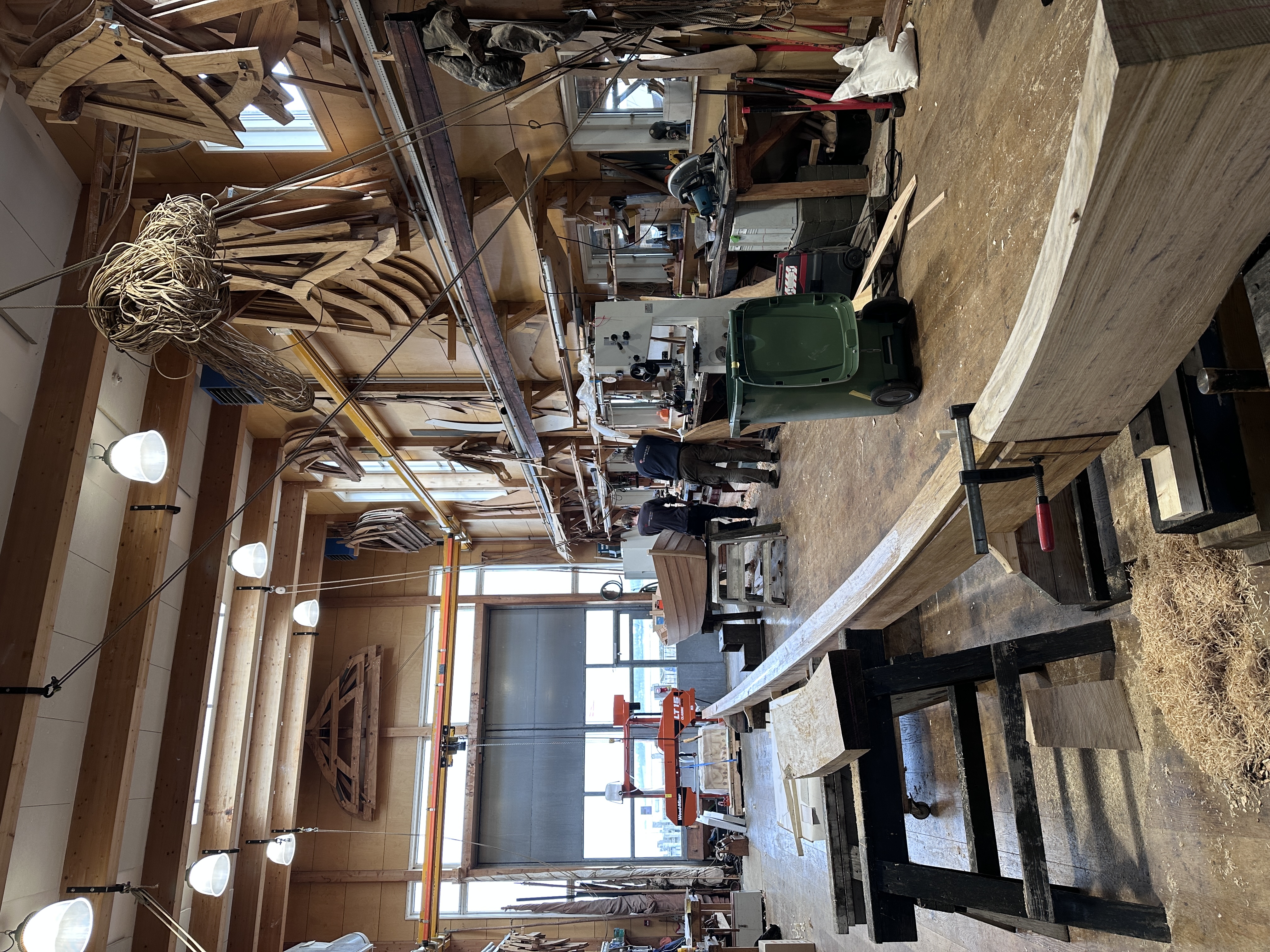 The museum features a large cinema screening an immersive documentary that details the archaeological discovery and preservation process. Outside the main hall, an active boatyard functions along the harbor. Artisans use historic materials, authentic iron rivets, and replica Viking tools to construct seaworthy copies of longships.
Traveler Tip: During the warm summer months, travelers can purchase specialized tickets to join an active rowing crew on the fjord aboard one of these handmade wooden replica ships.
A Stroll Through Roskilde Town
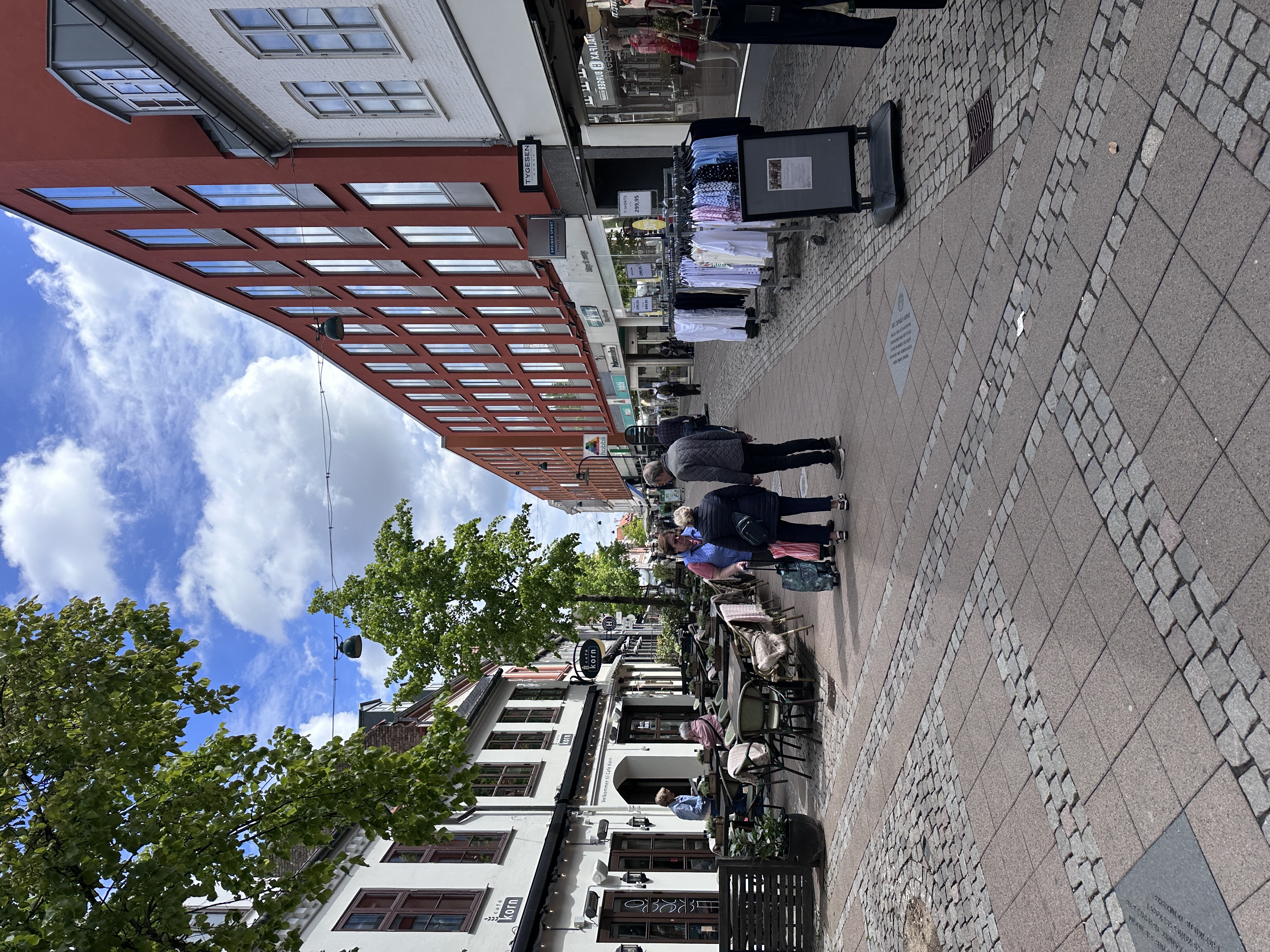 Following our museum tour, we hiked up the hill to explore the historic town center. The main pedestrian streets are lined with boutiques, traditional design shops, and lively cafes.
The town features several hidden gems, including the Roskilde Museum, which showcases local history from prehistoric times through the Middle Ages. For lunch, local spots serve traditional open-faced rye sandwiches, called smørrebrød, topped with pickled herring, roast beef, and crispy onions.
Roskilde Cathedral
 Dominating the townscape at the highest point is Roskilde Cathedral, or Roskilde Domkirke, a towering masterpiece of brick Gothic architecture designated a UNESCO World Heritage site.
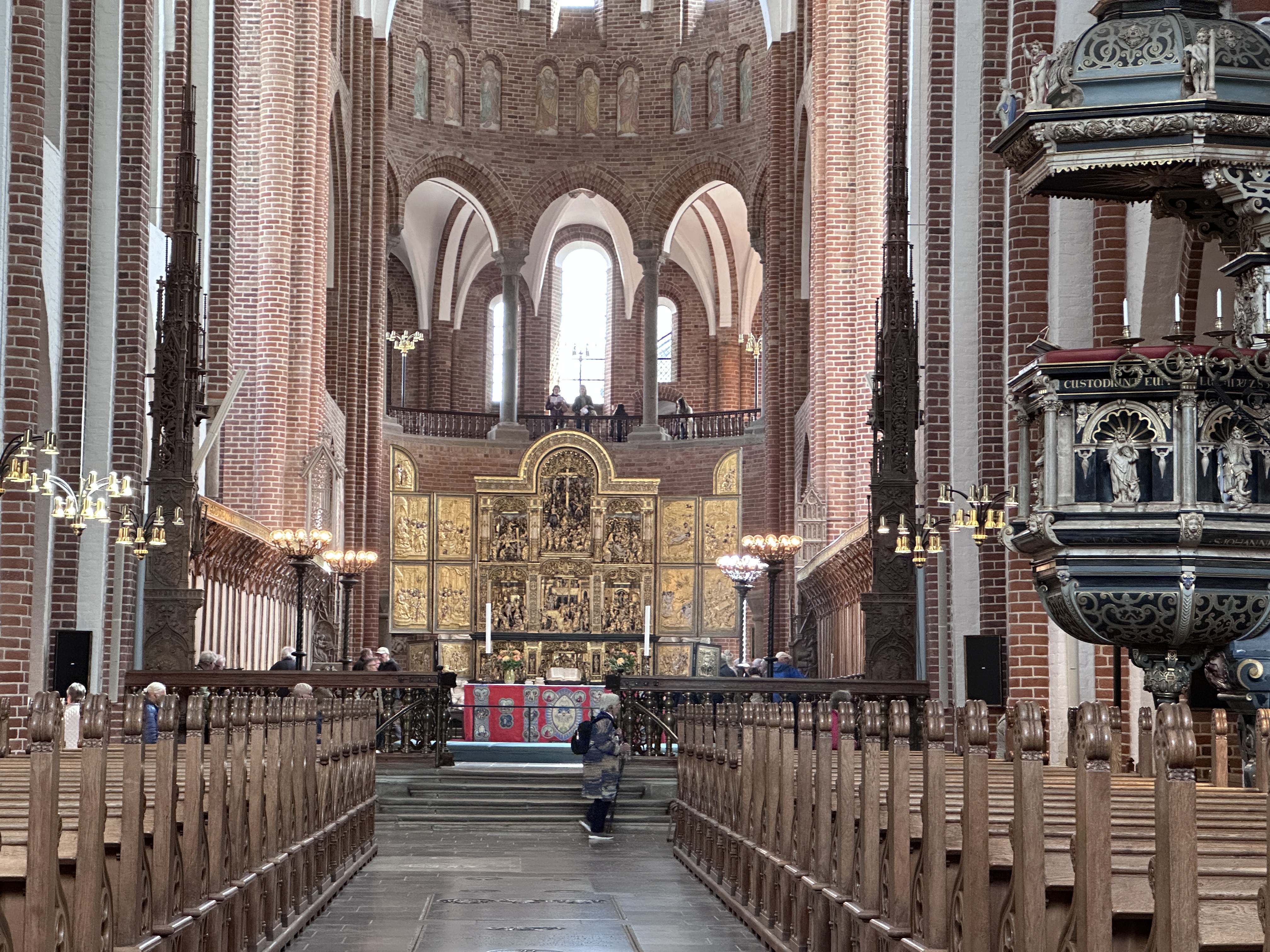 Construction began in the 1170s under Bishop Absalon and took over a century to complete. Built primarily using deep red brick, the church features two prominent spires that dominate the regional landscape. Over centuries, changing architectural tastes led various monarchs to construct custom burial chapels, appended to the main structure, seamlessly blending Gothic, Renaissance, and Baroque designs into the exterior facade.
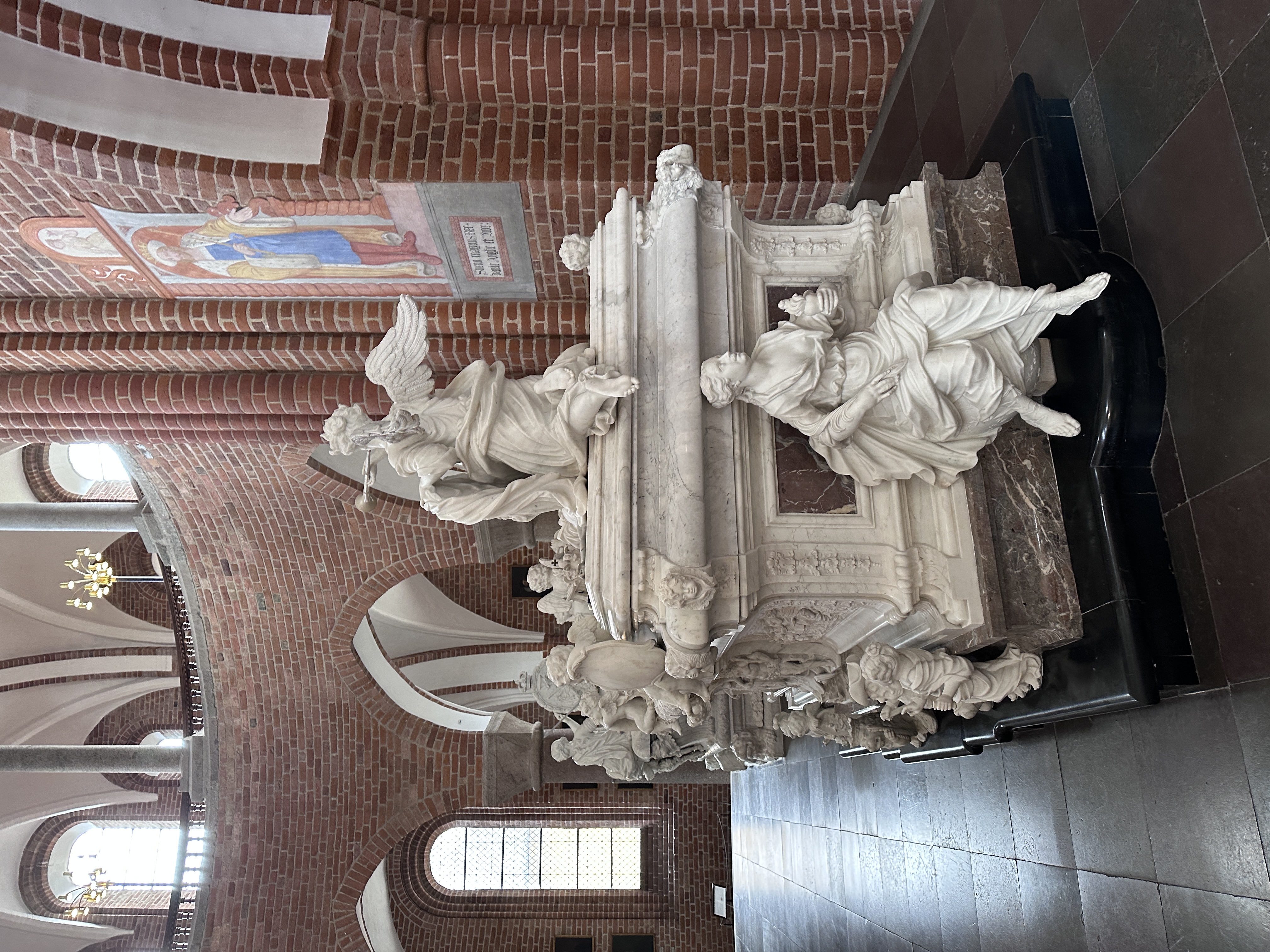 The interior sanctuary is grand, featuring high vaulted ceilings, a magnificent golden altarpiece carved in Antwerp, and a historic baroque pipe organ. Roskilde Cathedral serves as the official mausoleum for the Danish Monarchy. It holds the tombs of forty-four kings and queens within ornate stone chapels. The sarcophagi range from heavy medieval stone monuments to elaborate Renaissance marble effigies and modern, minimalist glass-and-brick structures.
Our Base of Operations: Køge
Choosing the historic town of Køge as our base proved an excellent decision, offering a peaceful coastal escape just a 30-minute train ride south of central Copenhagen.
Rox Resort and Pool Club
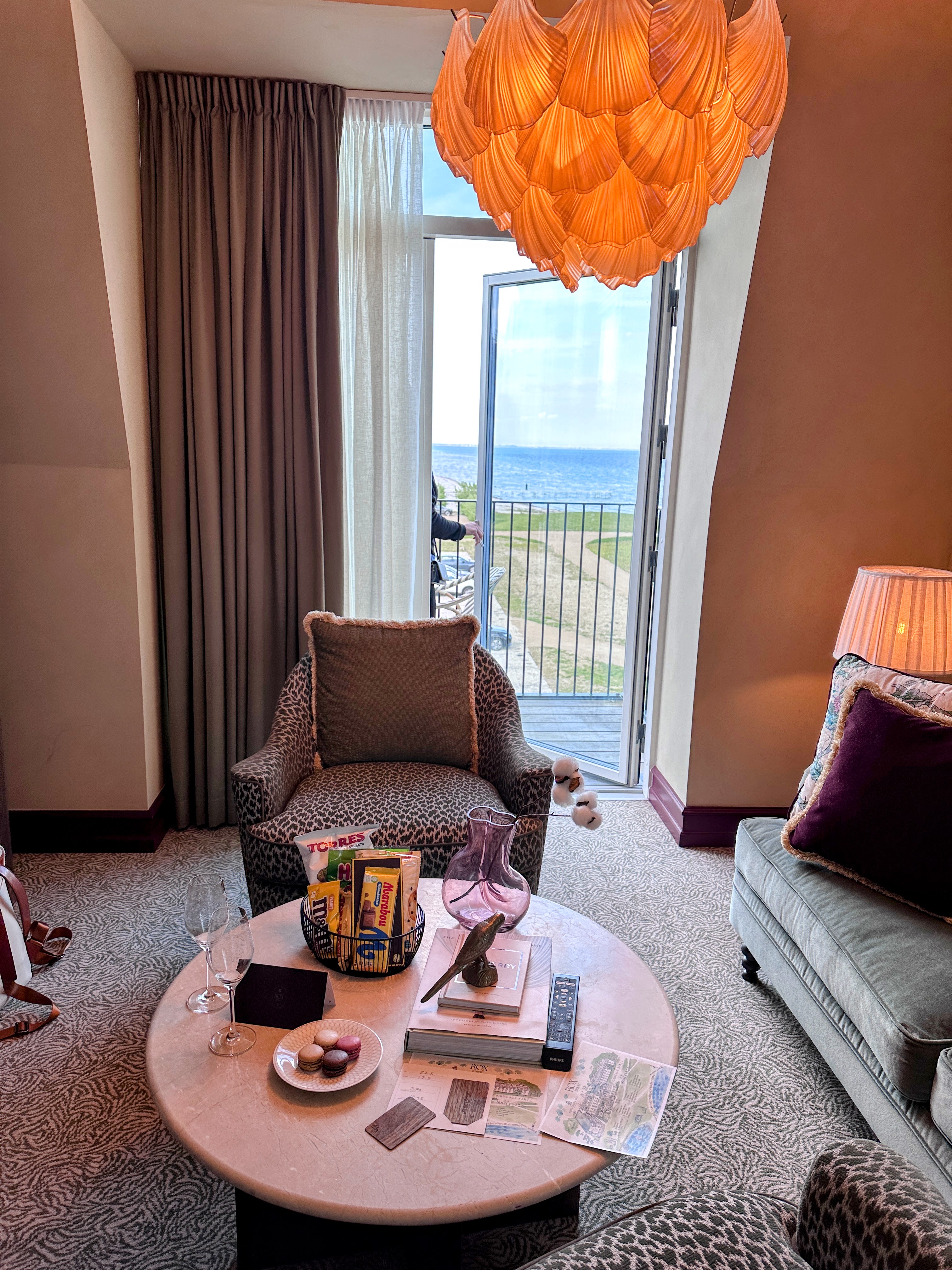 We checked into the Rox Resort, an exceptional luxury retreat situated directly on the shoreline of Køge Bay, which connects out to the Baltic Sea. This premium property blends mid-century design aesthetics with effortless coastal comfort, featuring spacious guest rooms with private balconies overlooking the open water. The resort offers tennis courts, fitness centers, and easy walking paths leading down to a historic wooden pier.
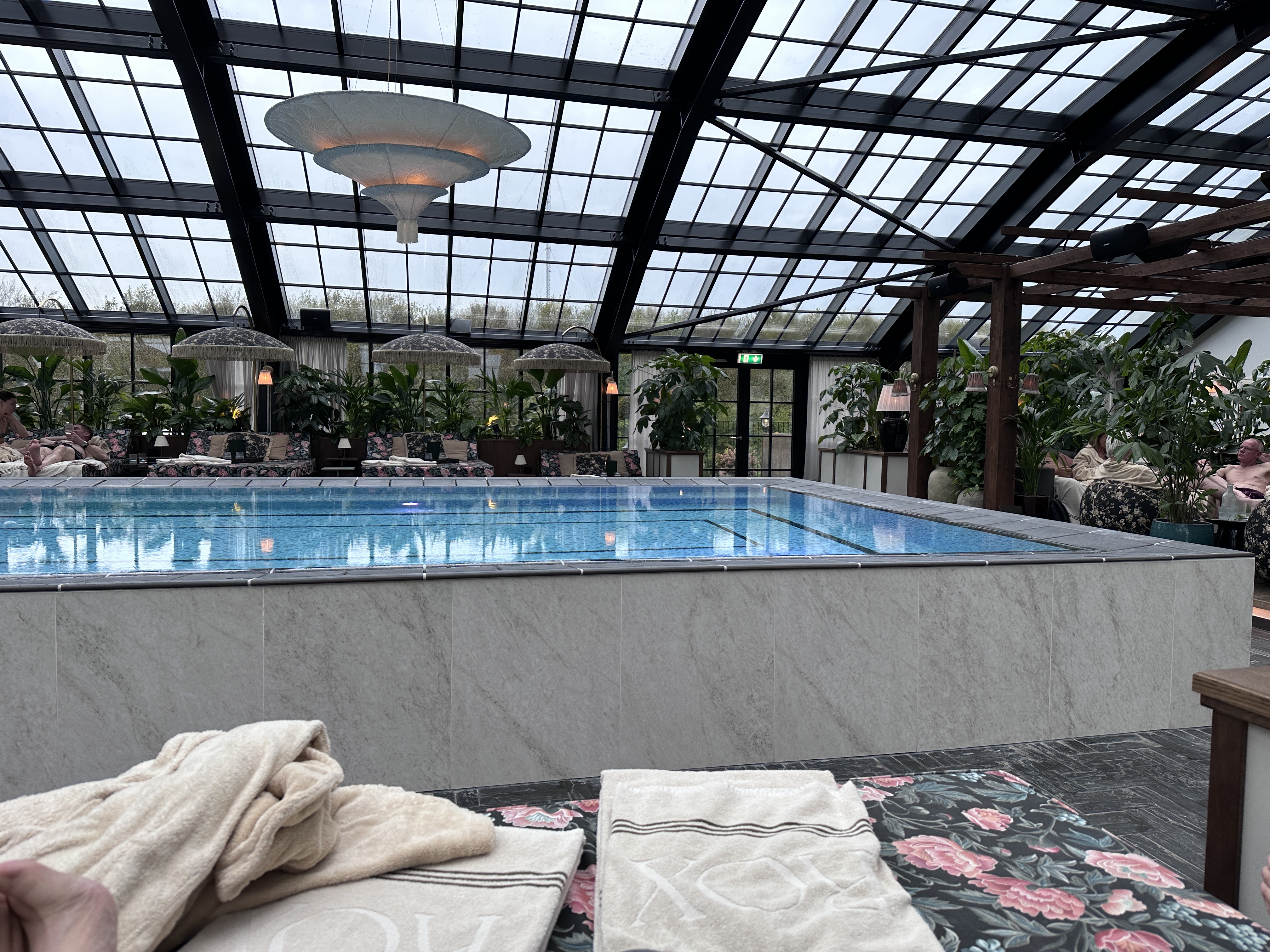 The centerpiece of the property is its exceptional Pool Club. This multi-level oasis features a covered, heated pool area, outdoor infinity decks, and a premium sauna. The sauna features two massive floor-to-ceiling panoramic glass windows, allowing guests to soak in intense heat while taking in sweeping, uninterrupted views of the outdoor pool deck and the rolling sea waves beyond. Attentive staff provide poolside drinks and snacks, creating a deeply relaxing environment after a long day of city exploration.
Fireside Flavor and Sunset Views at Smith Brasserie
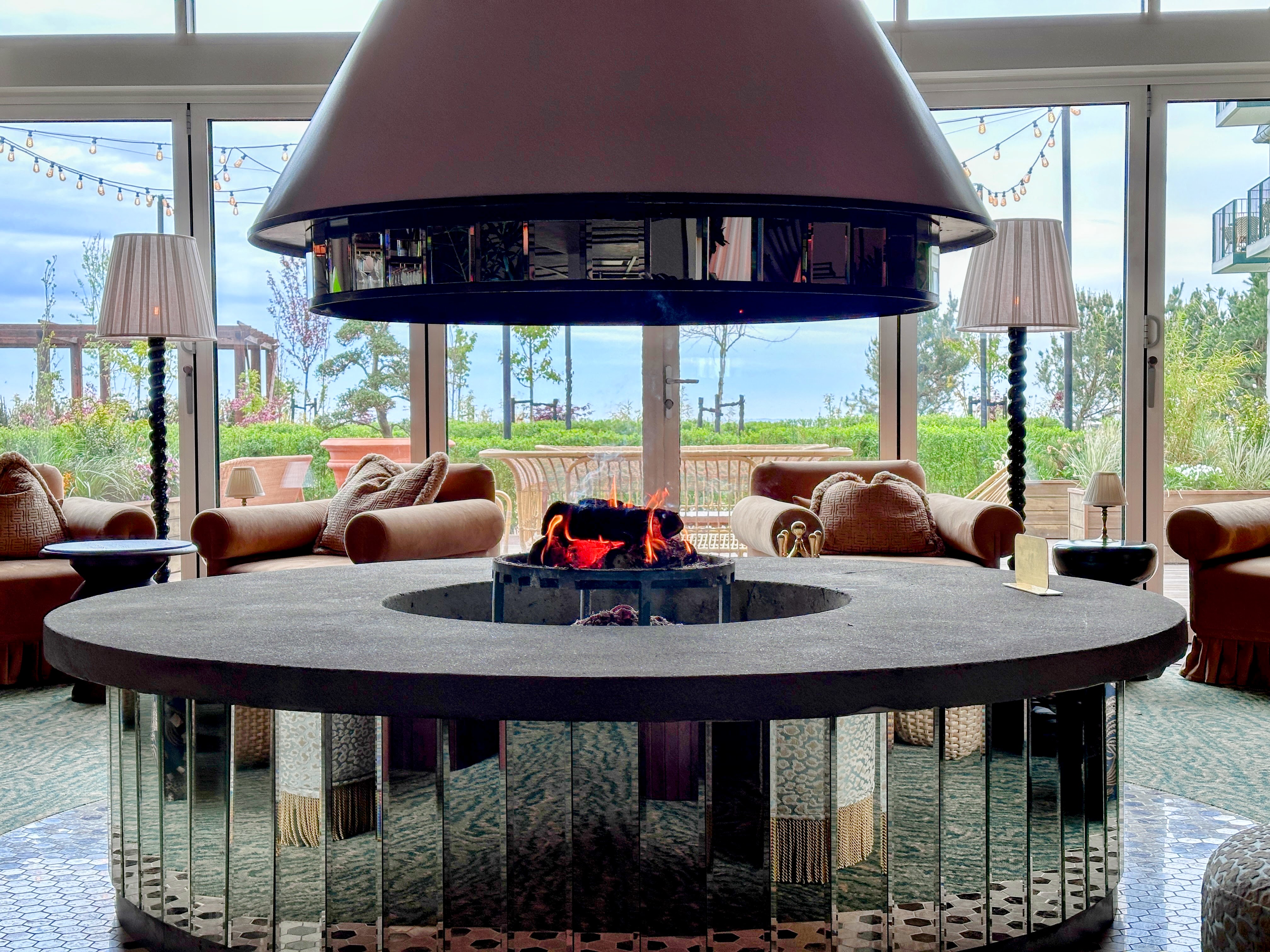 Dining at the resort's signature restaurant, Smith Brasserie, proved to be an extraordinary experience all its own. The space crackles with unmistakable energy, where a high-octane steakhouse soul seamlessly meets the refined elegance of a European brasserie. Sitting near the open kitchen counter allows you to watch the culinary team orchestrate each plate with fiery precision.
We opted for the multi-course Smith Signature Menu, a decision that took our palates on a spectacular journey. The meal began with the classic Smith Shrimp Cocktail, featuring exceptionally plump jumbo prawns poached in an aromatic court-buillon. Next, the kitchen presented a brilliantly executed, crispy Scallop Toast finished with a sharp kick of roasted sesame and black vinegar.
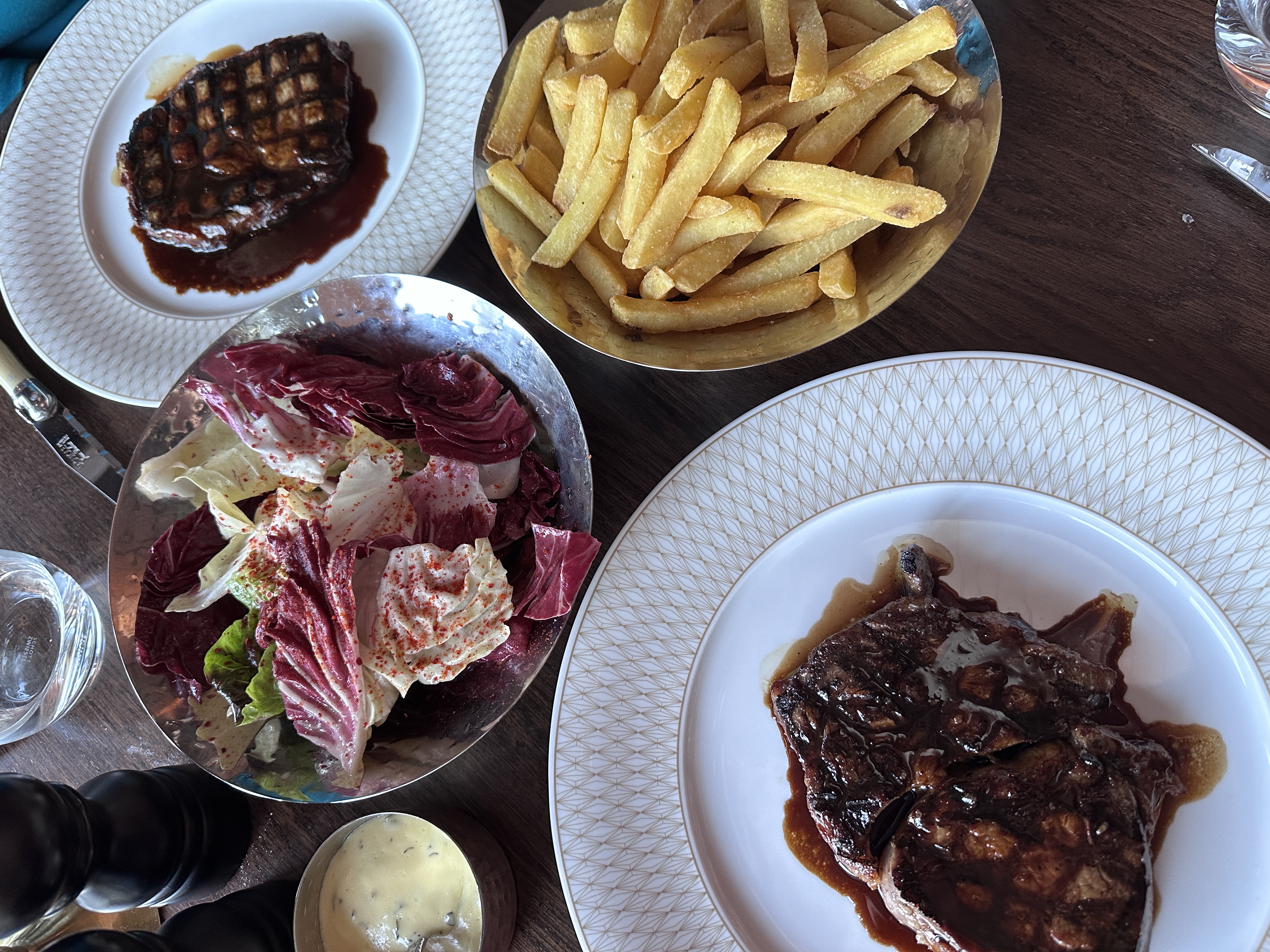 The main course delivered an absolute masterpiece: a thick, charcoal-grilled Sichuan Rib-Eye steak dusted with fresh peppercorns and plated with a rich, velvety pepper sauce that had just the right amount of heat. We rounded out the evening with a light yuzu custard. This refreshing dessert is a clever, citrusy twist inspired by the classic Danish citronfromage, leaving us thoroughly energized for the next day's adventures.
Every morning, the resort serves a comprehensive breakfast buffet included with your stay. The spread offers warm egg dishes, smoked bacon, artisanal pastries, freshly baked Danish sourdough breads, local cold cuts, organic cereals, and a unique, lightly sweetened Chinese pudding.
The Town of Køge and Local Attractions
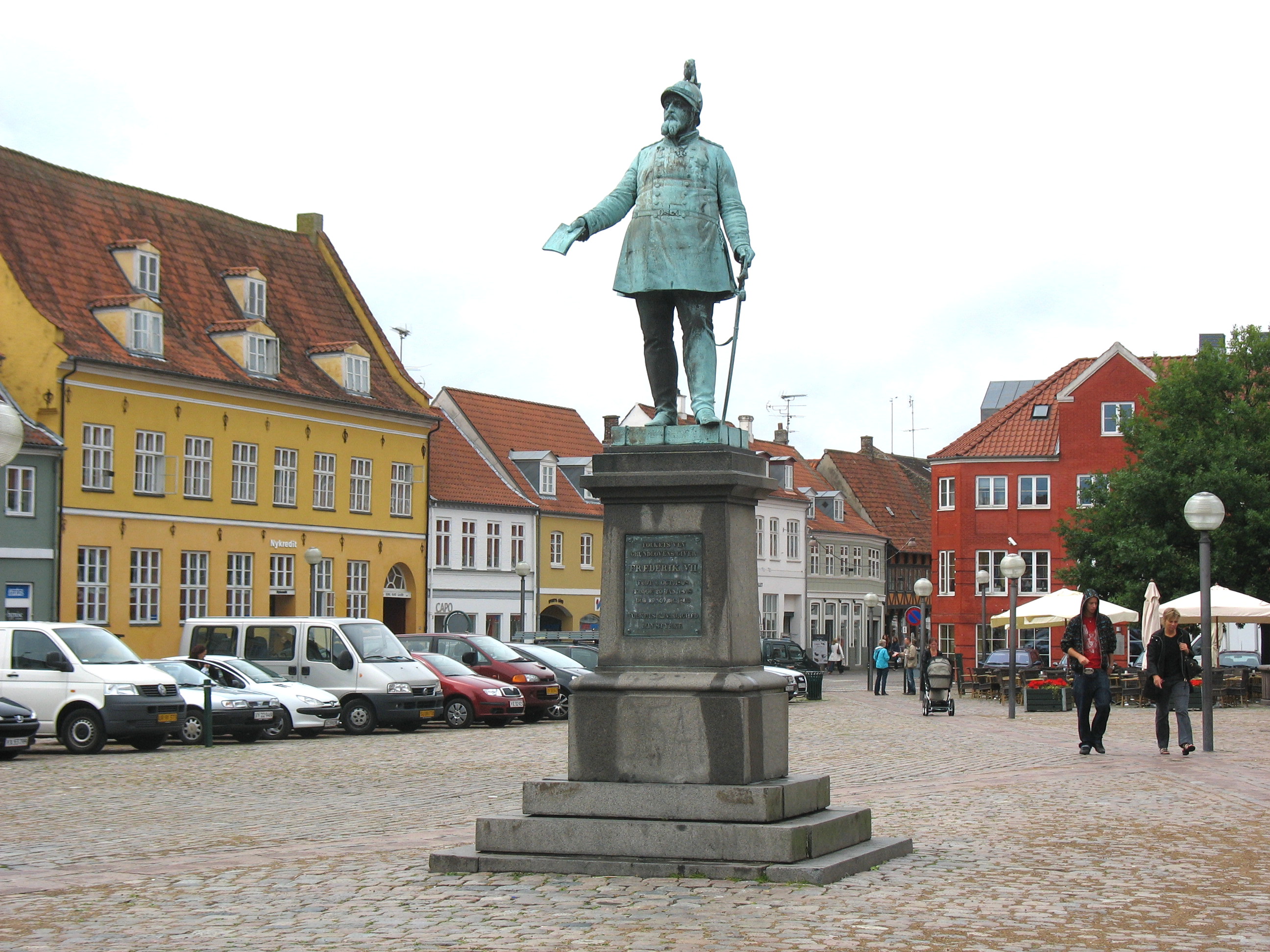 Stepping outside the resort brings you into one of Denmark's best-preserved medieval towns. The central market square, known as Køge Torv, is the largest public plaza in Denmark outside of Copenhagen, hosting vibrant open-air markets every Wednesday and Saturday.
The streets leading from the train station are lined with historic half-timbered houses dating back to the sixteenth century, including the country's oldest dated half-timbered building, constructed in 1527.
Beyond the historic center, the area offers excellent local attractions. The KØS Museum of Art in Public Spaces features unique insights into monument design, while the nearby Køge Marina serves as a scenic hub for local sailboats, seaside dining, and casual evening walks.
The Tangmose Forest Hike
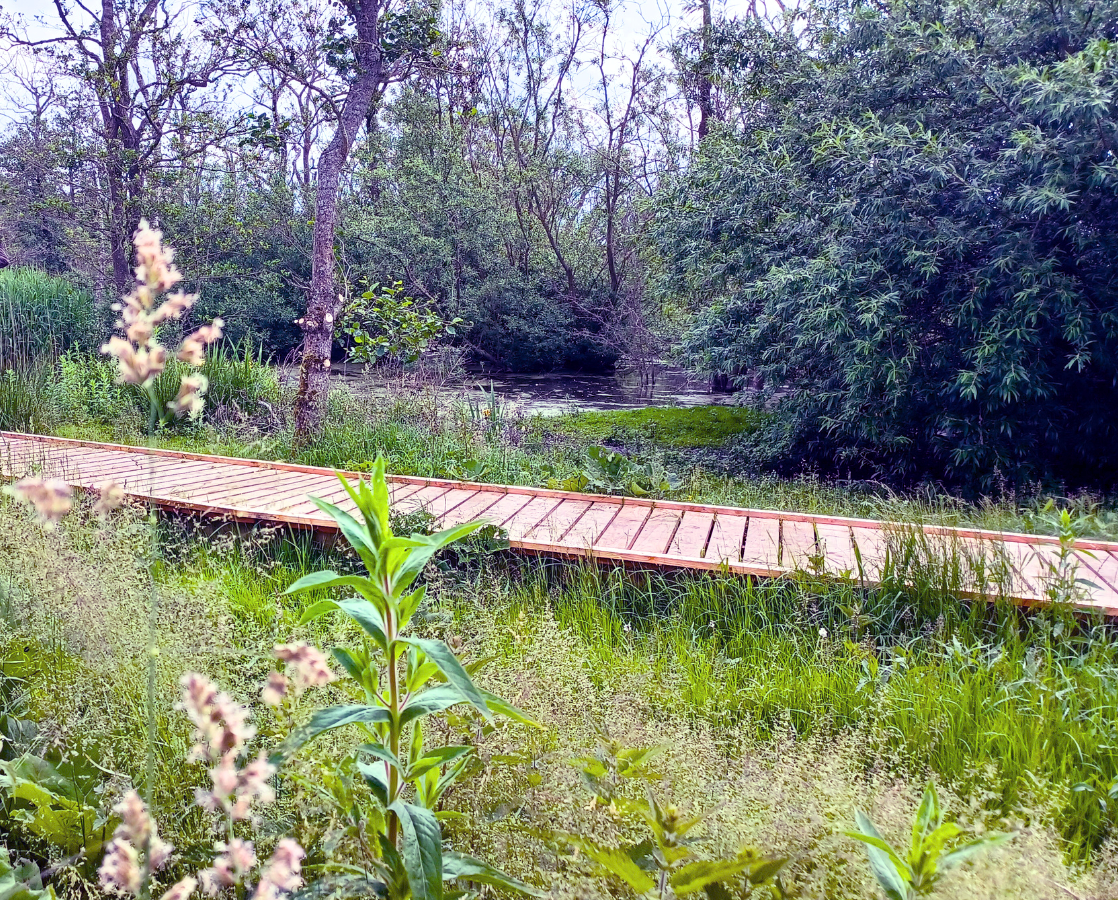 For an immersive nature experience, we spent an hour exploring the Tangmose Forest, or Tangmoseskoven. This pristine coastal woodland sits right next to the Køge Marina and the local beachfront, making it exceptionally accessible for travelers.
Our hike followed the popular Tangmoseskoven Rundt, an easy 2.1-kilometer loop trail that seamlessly connects the dense woods with the open marina and the sandy shoreline. The path climbs gently to a high panoramic viewpoint that offers fantastic views of the modern Rox Resort, the active harbor, and the Baltic Sea.
The forest loop takes roughly 30 to 60 minutes to complete, though many families opt for the extended 3.6-kilometer Heart Path route, locally known as the Hjertestien. The park features an active "Find Your Way" orienteering course with thirty-one distinct checkpoint markers hidden throughout the woods, making it an interactive adventure for children.
While walking beneath the canopy, keep a sharp eye out for local wildlife. We spotted several red squirrels, wild pheasants, and native hares darting through the coastal brush.
An International Day Trip to Malmö, Sweden
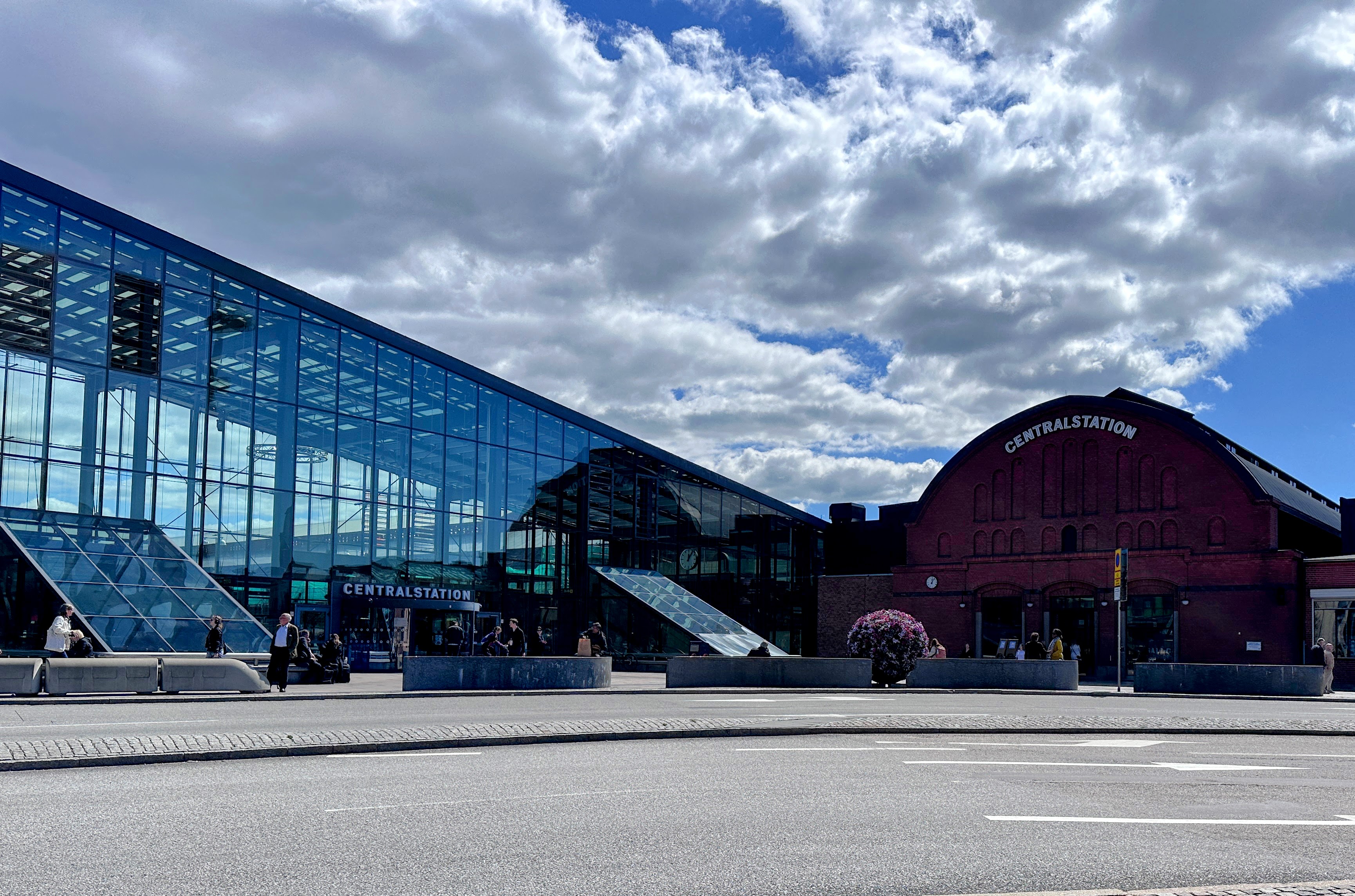
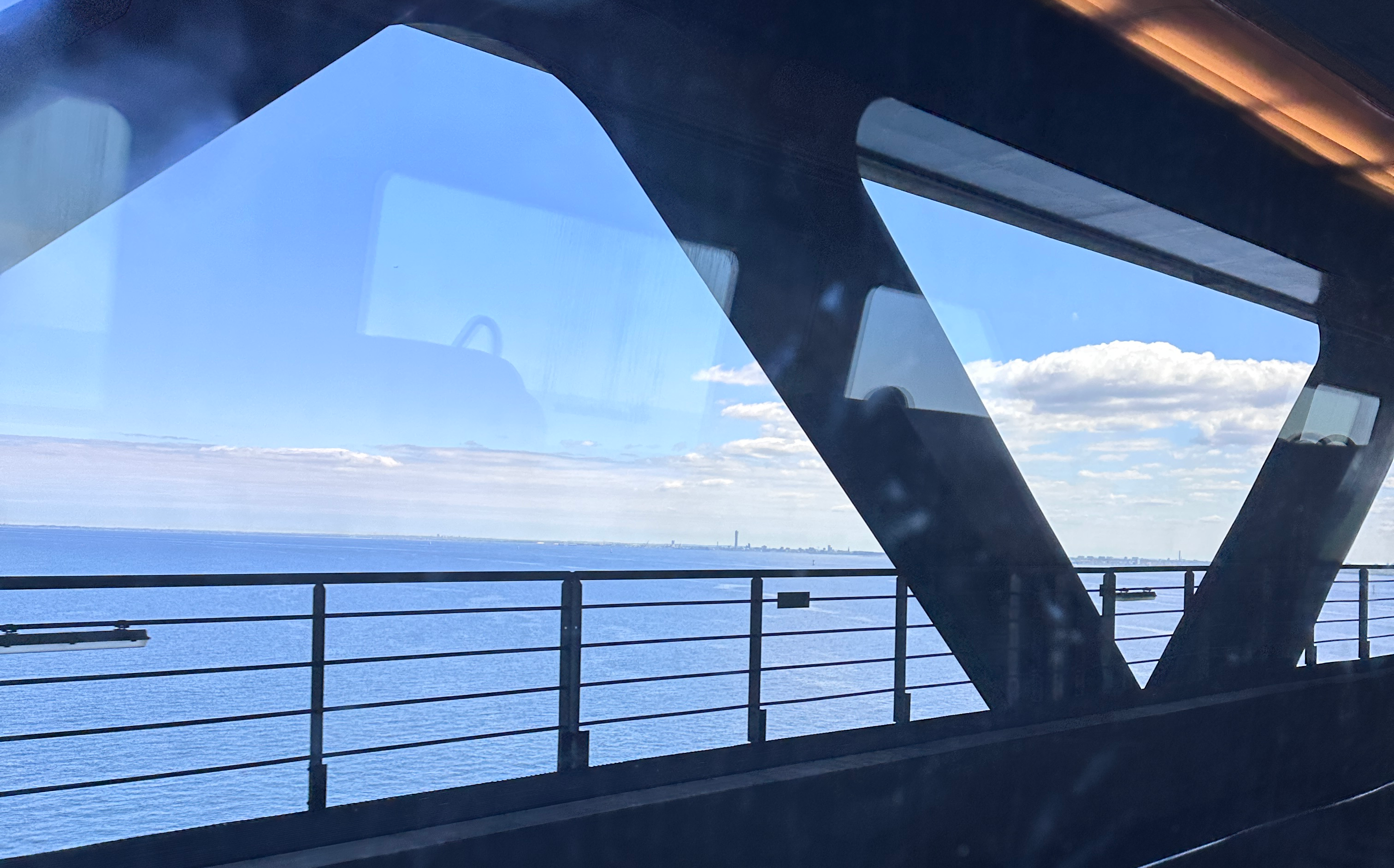 One of the great advantages of Denmark's transit network is its close connections to neighboring countries. We boarded a regional train at Copenhagen Central Station for a day trip to Malmö, Sweden's vibrant third-largest city.
 The train journey takes travelers across the Øresund Bridge, an architectural marvel. Spanning nearly eight kilometers across the Baltic Sea, this combined twin-track railway and dual-carriageway bridge opened in the year 2000, physically linking Denmark and Sweden.
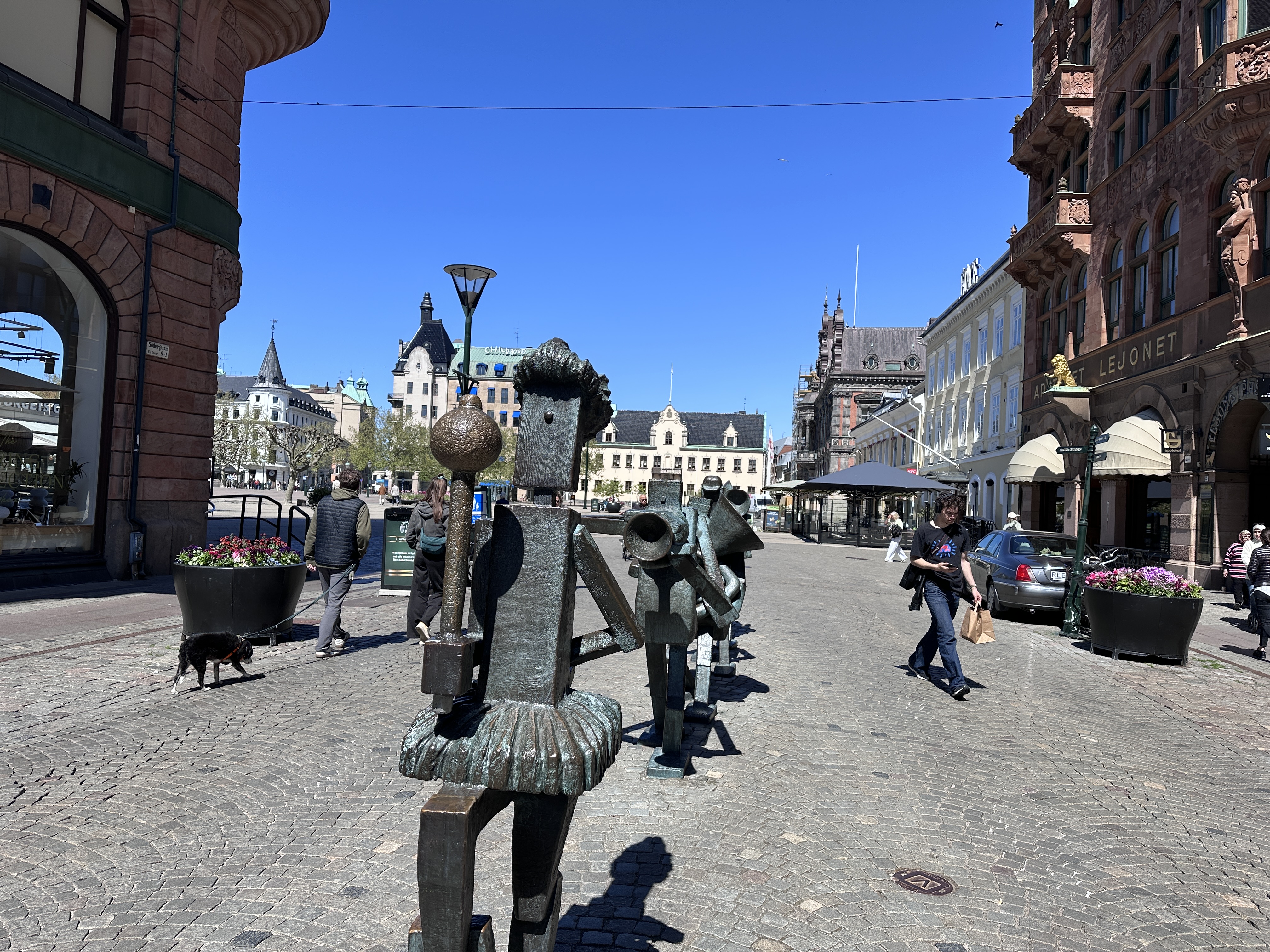 The transit experience is exceptionally smooth, offering great maritime views before the train transitions into an underground tunnel on the approach to Sweden. We spent our day exploring Malmö's historic old town, known as Gamla Väster, filled with colorful half-timbered houses and brick plazas.
User Comment (Lonely Planet Forums): "Taking the train from Copenhagen over to Malmö is an absolute breeze. Ensure you keep your passport handy for potential spot checks entering Sweden, but the views of the wind turbines in the sound are unforgettable!" - Elena R., Spain
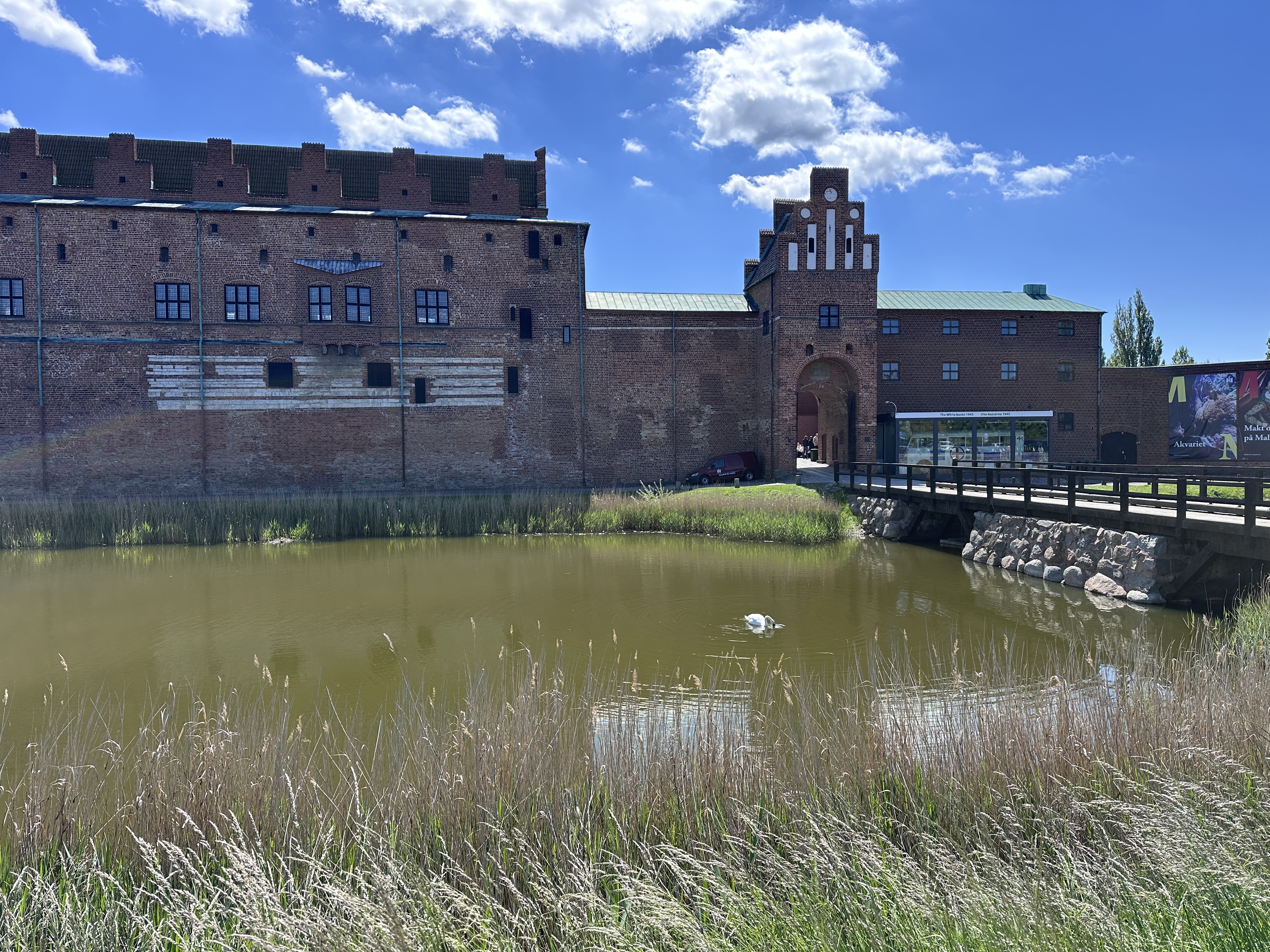
We toured Malmö Castle, or Malmöhus Slott, which is the oldest surviving Renaissance castle in the Nordic region. Today, the historic fortress houses the Malmö Museum of Art and a natural history center, surrounded by a grand castle moat and the organic gardens of Slottsträdgården. It served as a fantastic international finale to an unforgettable Scandinavian journey.
The Next Journey Awaits
Pack your camera, secure your regional transit pass, and step directly into your own Scandinavian adventure across the historic Baltic lands.