World culture at Bowers Museum
 Tucked in the heart of Santa Ana, the Bowers Museum is a gateway to world cultures. The building itself, with its Spanish-style courtyards and palm-lined walkways, feels like a peaceful retreat before you even step inside. Inside, rotating blockbuster exhibitions stand alongside a permanent collection that celebrates art and artifacts from across the globe. From ancient China to the islands of Polynesia, from Mexican festivals to California history, Bowers blends scholarship with storytelling.
Traveler tip: Current hours are typically Tuesday to Sunday, 10 am to 4 pm, with closures on Mondays and major holidays. Always verify details before you go on the official Visit page.
World of the Terracotta Warriors
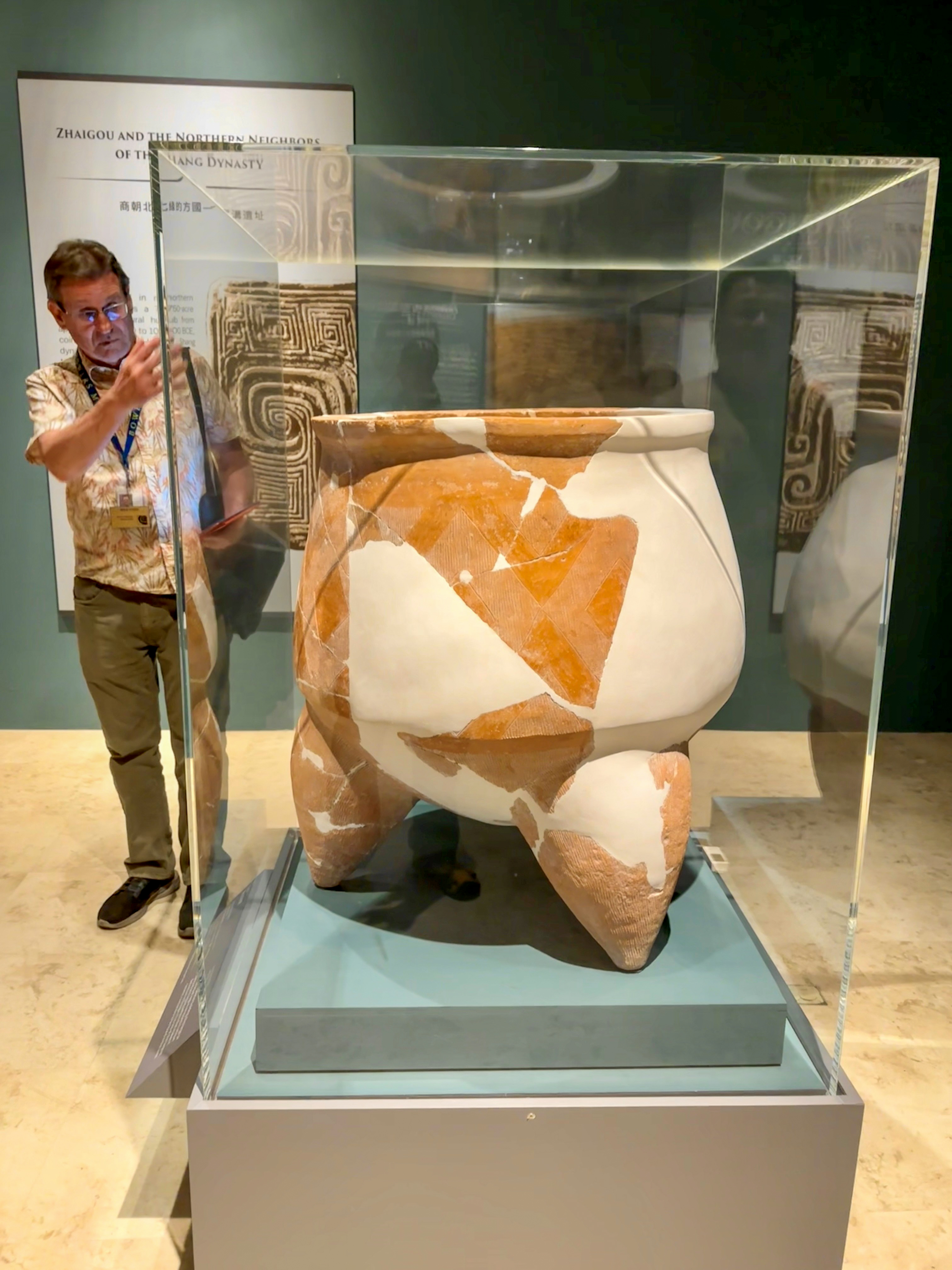 Our volunteer docent, Mike, met our group at the entrance and guided us straight to the special exhibition, World of the Terracotta Warriors: New Archaeological Discoveries in Shaanxi in the 21st Century.
The spacious exhibit hall displayed artifacts representing that era of China’s history, with a mix of originals and careful reconstructions. Mike pointed out details easy to miss on your own, archers’ shoes designed for kneeling, cavalry bridles, and the subtle rank cues in armor and headgear. His pacing worked well for both kids and adults, encouraging questions and linking what we saw to the museum’s permanent Chinese gallery.
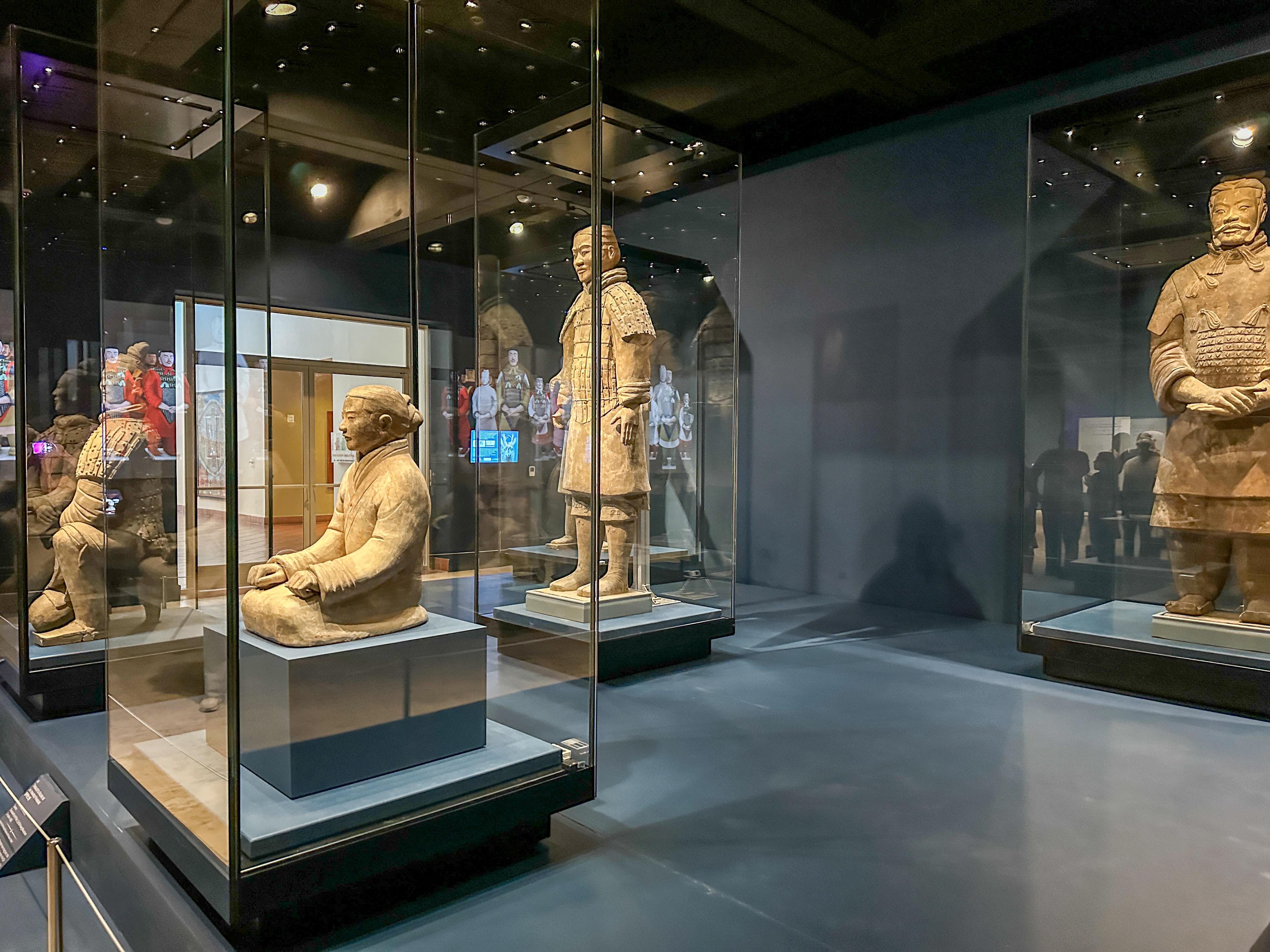 When we approached the full-sized warriors, Mike explained that each was once painted in bright pigments of red, white, and blue. These colors have mostly disintegrated over time, especially when exposed to air and light after excavation.
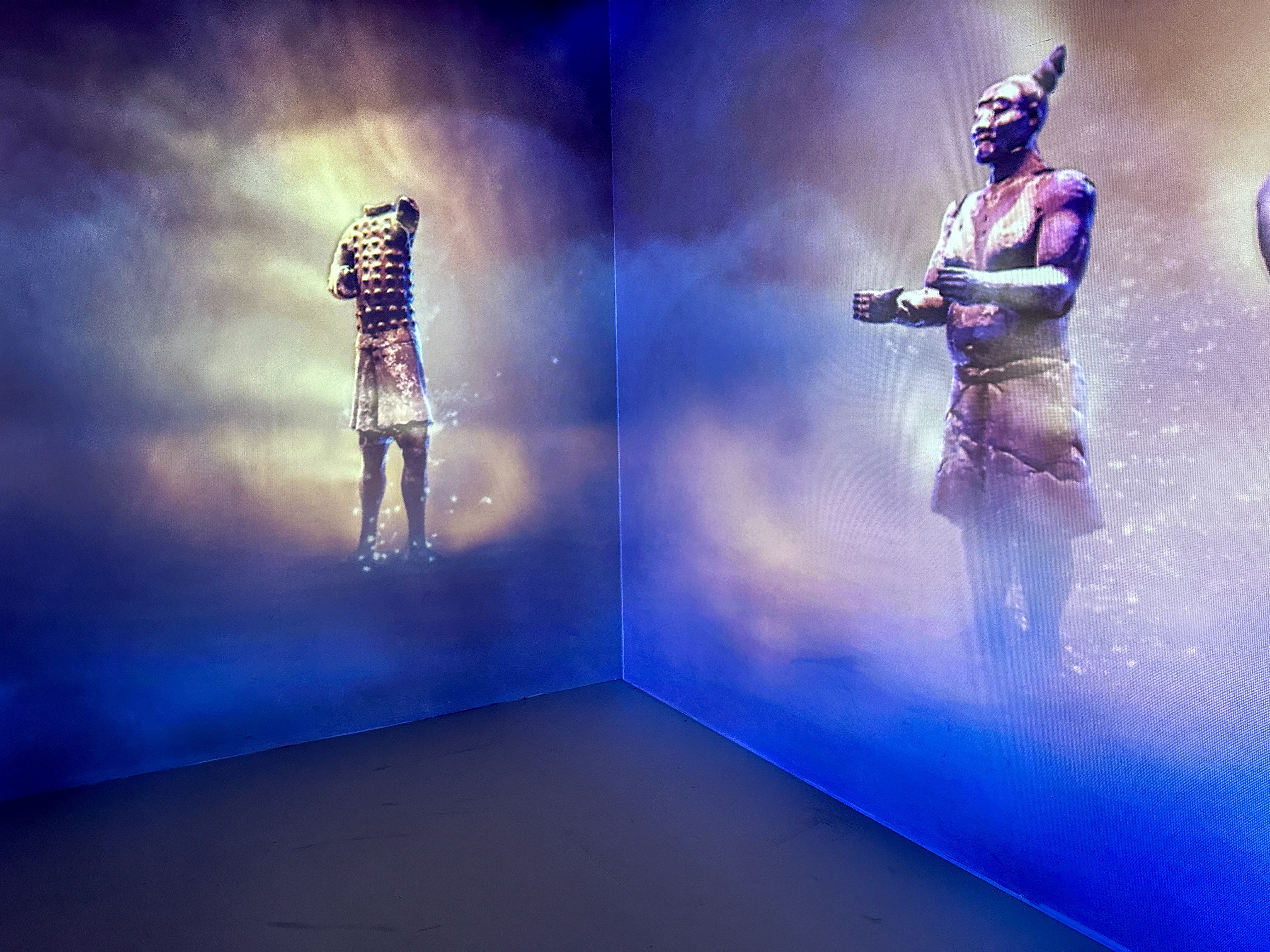
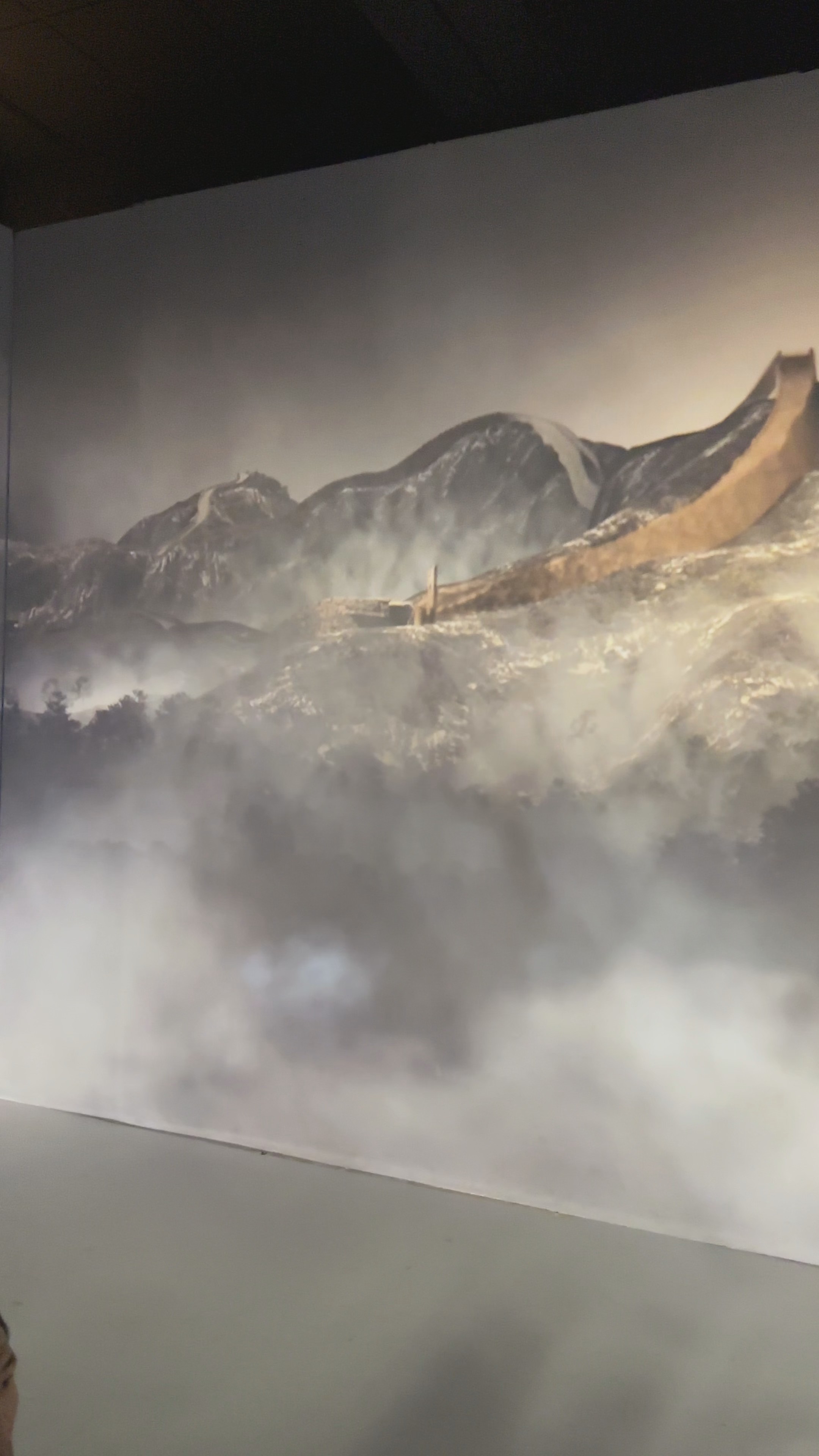
The exhibition builds toward an immersive room where floor-to-ceiling projections surround visitors with the dig sites. Marching ranks ripple across the walls while drums and hoofbeats echo through the speakers. Our group stood still, tracing uniforms, hair knots, and armor plates, while Great Wall landscapes swept across the projections.
Some children sat cross-legged on the floor, gazing in awe at the shifting images. At times, the movement created the sensation of flying over the terrain so quickly that I felt unsteady, but it was unforgettable.
Interesting fact: The Bowers exhibition uses timed-entry windows (generally on the hour from 10 am to 3 pm). Booking in advance helps avoid lines.
Find your Orange County Activities here.
What the exhibit is really about
 The Terracotta Army was discovered near modern-day Xi’an, in Lintong District, Shaanxi Province. The warriors stand in vast underground pits just east of the emperor’s burial mound at the Mausoleum of the First Qin Emperor, at the foot of Lishan. This immense project was commissioned by Qin Shi Huang, the first emperor of a unified China. He began construction of his mausoleum after taking the throne as king at the age of 13. By the time he unified the warring states in 221 BCE, the project was already underway. Qin Shi Huang died in 210 BCE, leaving behind a necropolis so large that ancient texts describe it as a miniature empire built by hundreds of thousands of laborers.
The mausoleum was far more than a tomb. It was a fortified city of the afterlife, with palaces, offices, stables, and armories, all surrounded by protective walls. The Terracotta Army stood as guardians, placed in pits to protect the inner compound. Historical records describe flowing rivers of mercury within the sealed tomb chamber, a detail supported by modern soil surveys that have found unusually high mercury levels near the burial mound.
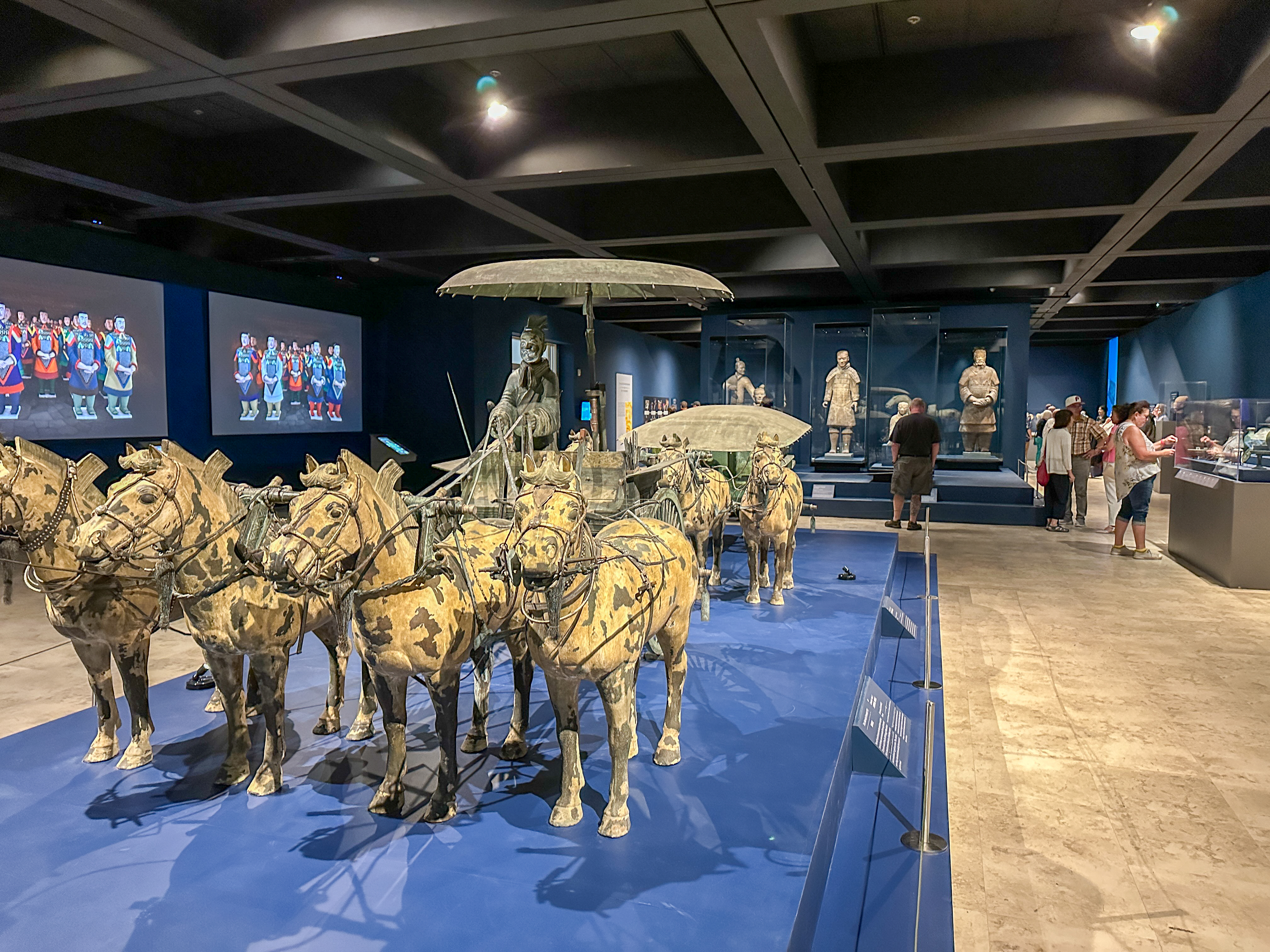
Interesting fact: The umbrella-shaped canopy mounted on top of the chariot wasn’t for shade or rain. It was designed as a shield to deflect falling arrows during battle.
 Excavations reveal the remarkable variety of this underground world. Some pits show endless ranks of infantry, spearmen, swordsmen, and archers, arranged in strict battle formation. Others display cavalry and chariots, with terracotta horses standing beside commanding officers. Still more unusual pits contain figures of officials, acrobats, and strongmen, along with stone armor and bronze waterfowl from a garden setting. These discoveries suggest the emperor’s vision for the afterlife included not just military might but the richness of court life as well. Many warriors were once armed with real bronze weapons, swords, spearheads, lances, and finely engineered crossbow triggers, evidence that the army was conceived as a truly functional force.
Interesting fact: Scientific studies confirm that the warriors were originally painted with vivid mineral pigments, including mercuric sulfide red, which are highly sensitive to air and light once unearthed. For background on polychromy research, see overviews by UNESCO and peer-reviewed conservation studies.
Don’t skip the permanent galleries
Polynesian and wider Pacific arts
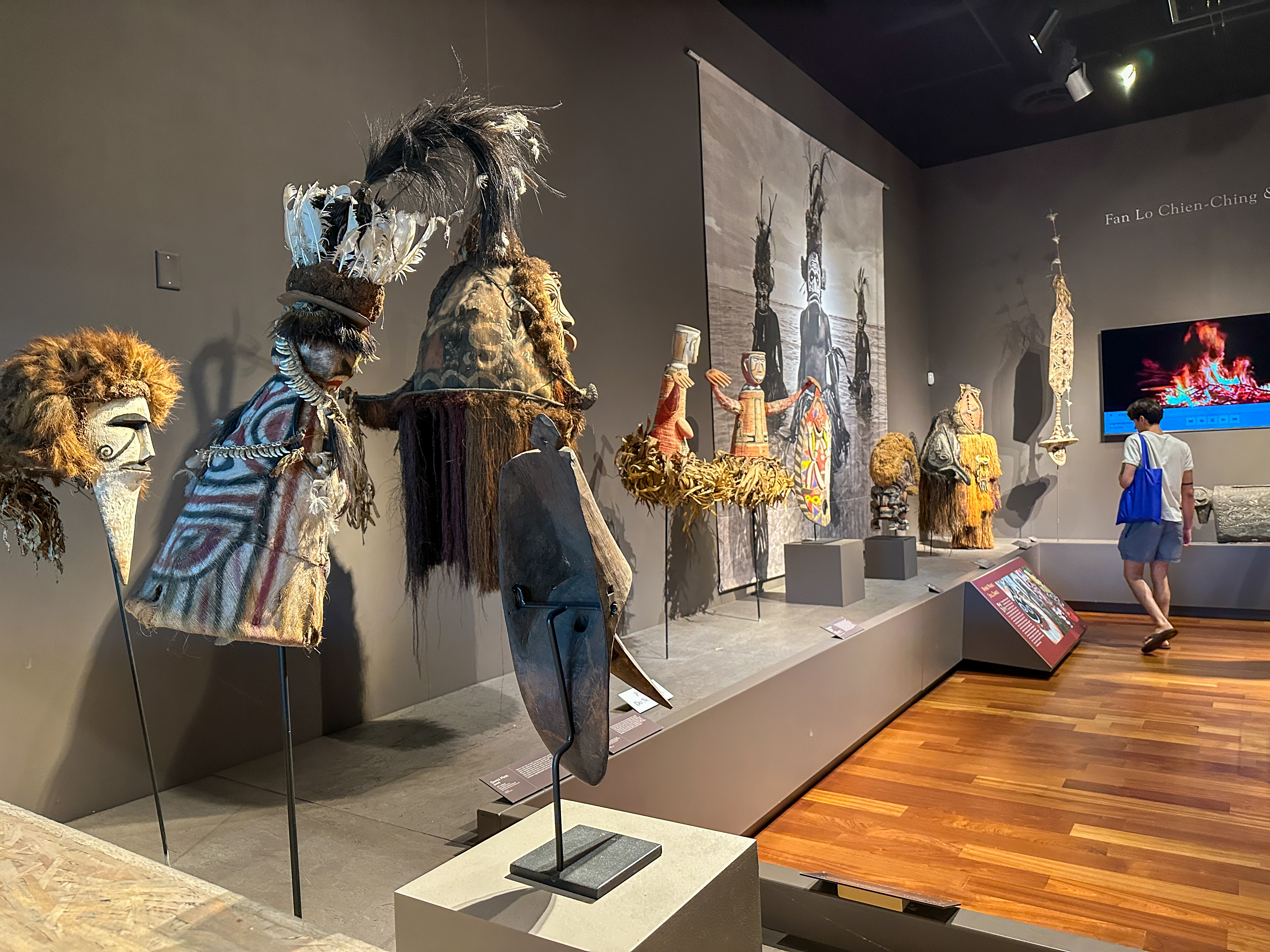 The Polynesian and Pacific galleries invite visitors into island cultures that span thousands of miles of ocean. Shell and fiber adornments, once worn for ceremonies, sit behind glass, their materials showing both beauty and practicality. Carved ancestor figures stand tall as guardians, their smooth surfaces polished by generations of touch. War clubs and other weapons, crafted from dense tropical hardwoods, highlight traditions of strength and skill. Navigation exhibits explain how voyagers read stars, swells, and winds to cross open seas in double-hulled canoes. Clear, accessible labels help visitors connect the artistry with the spiritual beliefs and daily practices of Pacific peoples.
Find your Orange County Activities here.
Mexican and Mesoamerican arts
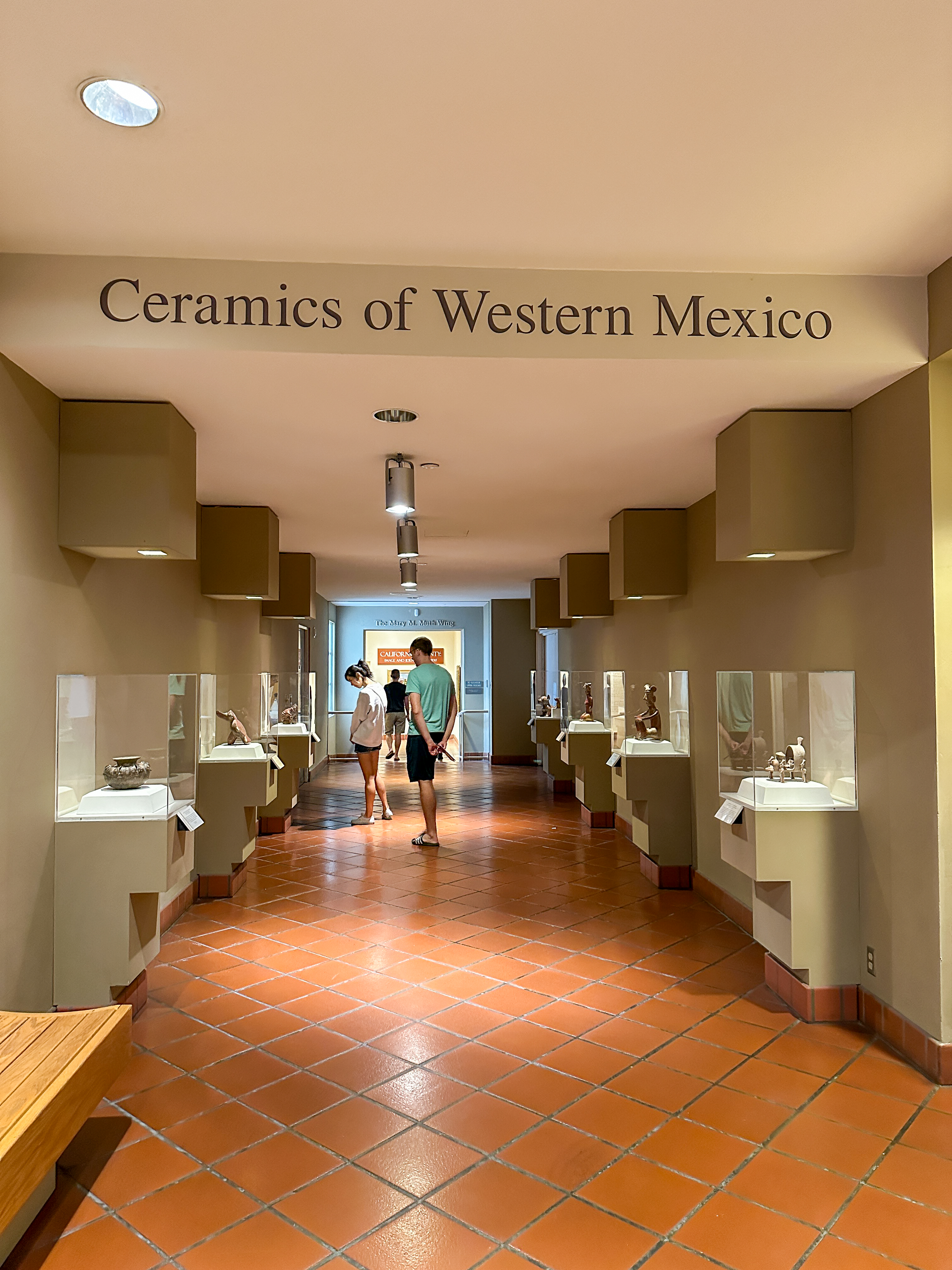 The Mexican galleries showcase both ancient and folk traditions. Intricately painted ceramics from western Mexico’s shaft tombs demonstrate how artistry followed the dead into the afterlife. Brightly decorated festival masks hang nearby, created for dance and celebration, blending Indigenous imagery with colonial influence. Religious art appears in retablos and devotional paintings, while large-scale sculptures recall gods and rulers of early civilizations. The variety reveals Mexico’s cultural heritage as a tapestry of ritual, daily life, and celebration. Walking through the space feels like moving from sacred shrines into a lively town square.
Ancient arts of China
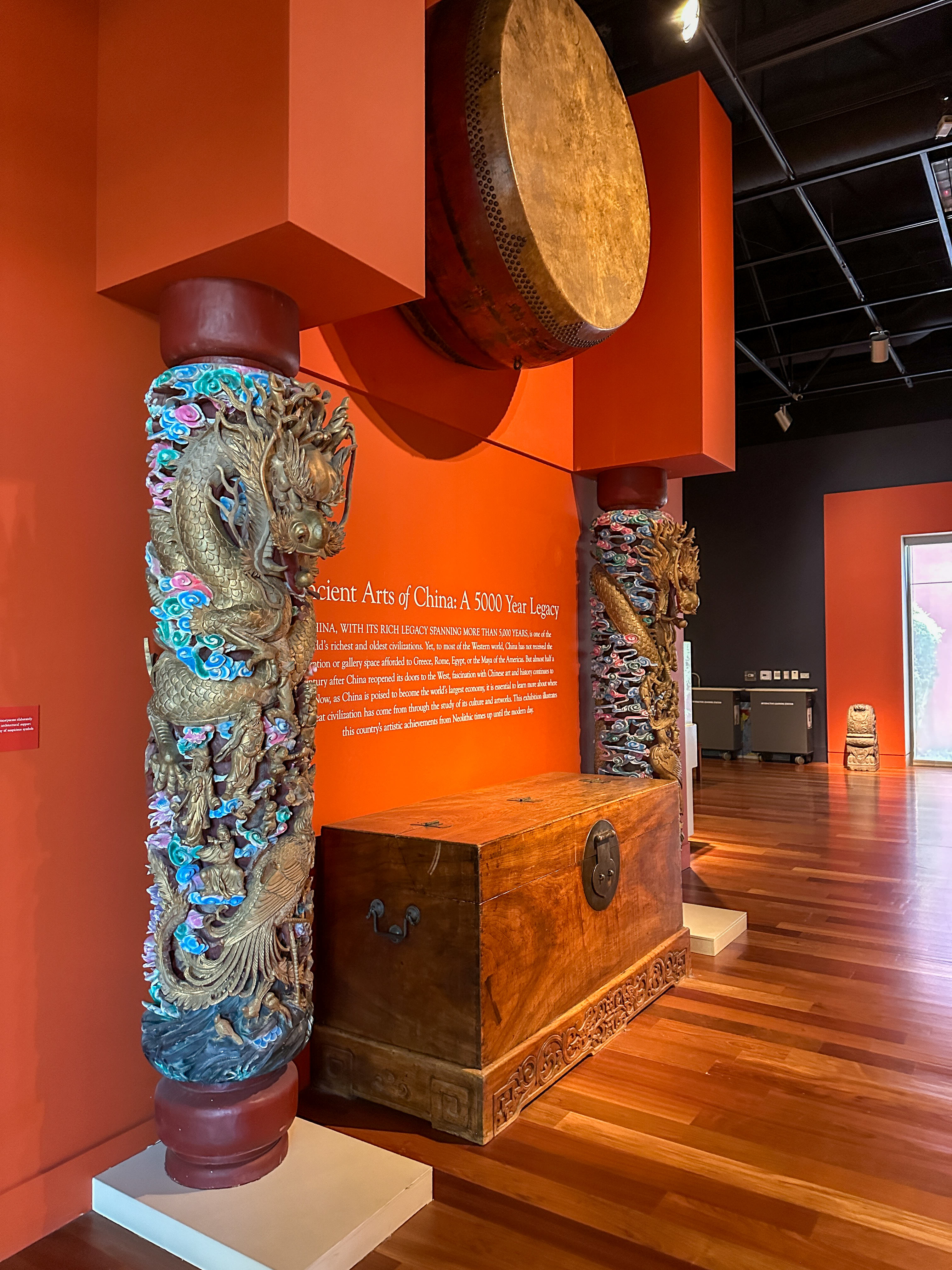 Bowers’ Chinese collection complements the Terracotta Warriors exhibition by showing the broader traditions that framed their creation. Bronze ritual vessels, decorated with animal masks and geometric patterns, demonstrate the importance of ceremony in early dynasties. Jade carvings, treasured for their durability and symbolism, reveal the artistry of ancient craftsmen. Ceramics range from simple jars used in daily life to elegant painted porcelains, while textiles and decorative arts illustrate refinement across centuries. Together, these objects provide context for the warriors by placing them within a legacy that stretches thousands of years.
Traveler tip: Bowers regularly hosts free family festivals on many first Sundays with performances and art making in the Key Courtyard. Check upcoming dates under Programs.
Docent-led tours
Docent-led tours at Bowers are both knowledgeable and welcoming, offering insight across the museum’s many collections. Most docents are volunteers with a genuine passion for art, history, and culture, and their enthusiasm makes each tour engaging. They help visitors notice details that might otherwise go overlooked, whether it is the carving on a Polynesian ancestor figure, the symbolism in a Mexican festival mask, or the delicate decoration on a Chinese bronze vessel. Tours often weave together stories that link objects from different galleries, giving a broader sense of how cultures connect across time and geography. Questions are always encouraged, and the pace works well for families as well as adults. Because tour topics vary, it is best to check the schedule upon arrival or on the museum’s website for the day’s offerings https://www.bowers.org/tours.
Traveler tip: If you are planning for a group, Bowers offers discounted group and school tours during regular hours with advance booking. See the Tours and Education pages for details.
Visitor basics
Location
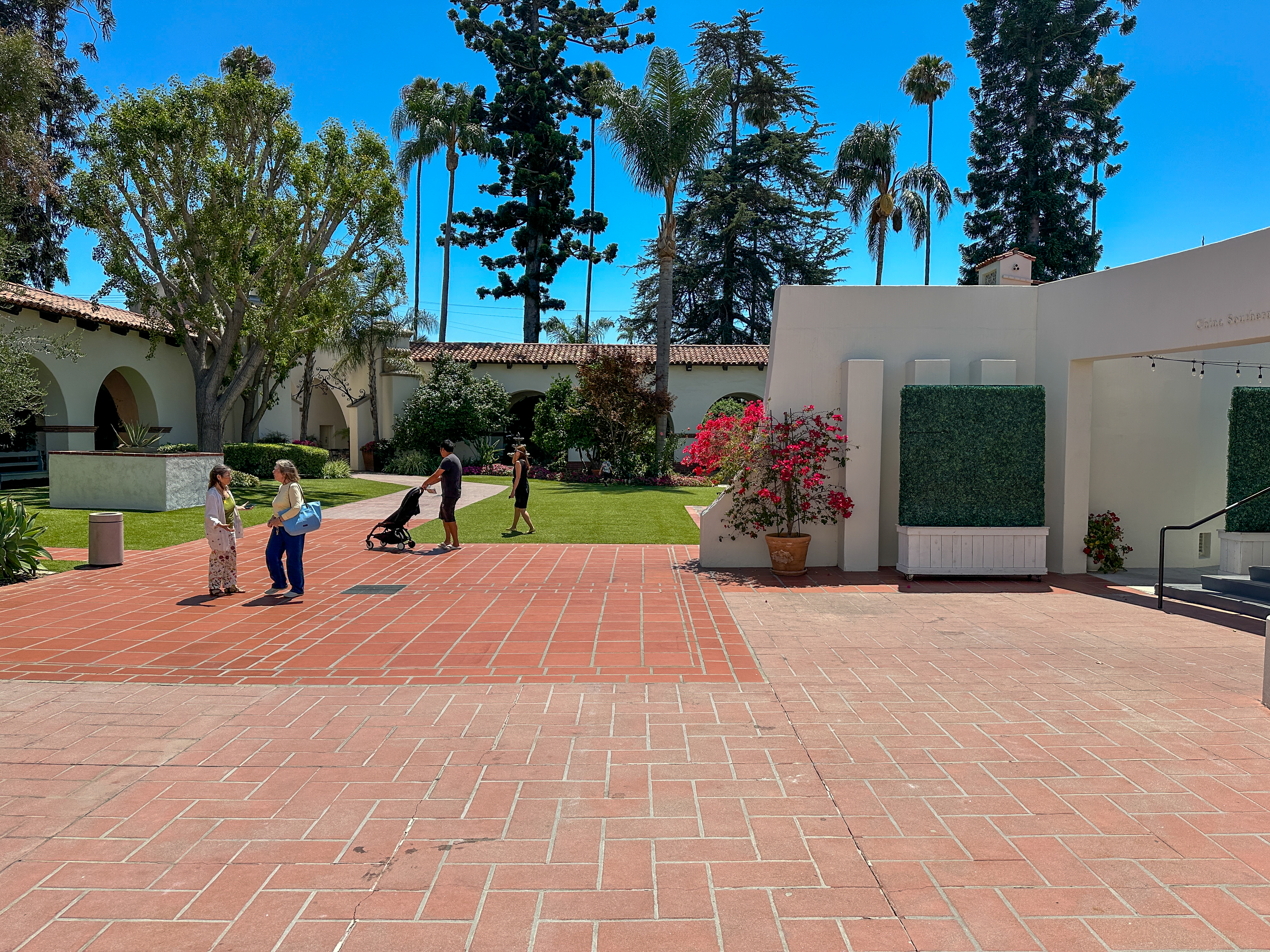 Bowers Museum, 2002 N Main St, Santa Ana, CA 92706
Hours
- Typically open Tuesday–Sunday, 10 am–4 pm
- Closed Monday and major holidays
Confirm current hours on the Visit page.
Tickets
General admission is usually $18 for adults and $15 for seniors and students, with children under 12 free. Special exhibitions require an additional fee; for example, the Terracotta Warriors exhibition costs $29, which also includes entry to the permanent galleries.
Money saver: Santa Ana residents receive free general admission on Sundays with proof of residency.
Amenities & tips
- Large café with indoor and outdoor seating for lunch and snacks.
- Gift shop featuring quality books and crafts.
- Photography is usually allowed in permanent galleries without flash; restrictions often apply in special exhibitions.
- Plan at least 2–3 hours to see both the special exhibition and the permanent galleries.
On-site bites: Tangata restaurant typically serves lunch Tuesday to Friday 11 am to 2 pm and weekends 11 am to 3 pm. For group reservations or current hours, call the number listed on the Visit page.
Logistics tip: Timed-entry exhibitions often sell out on weekends. Reserve tickets early and arrive 10–15 minutes before your slot to maximize time in the immersive galleries. Start at the special exhibition, then loop through permanent galleries.
After more than two hours at the museum, I left in awe of the exhibits, the engaging docent tour, and the thought-provoking Terracotta Warriors. I also noticed how enthralled the children in our group were, captivated by the artifacts, delighted by the immersive room, and engaged by the stories and details our guide shared.